

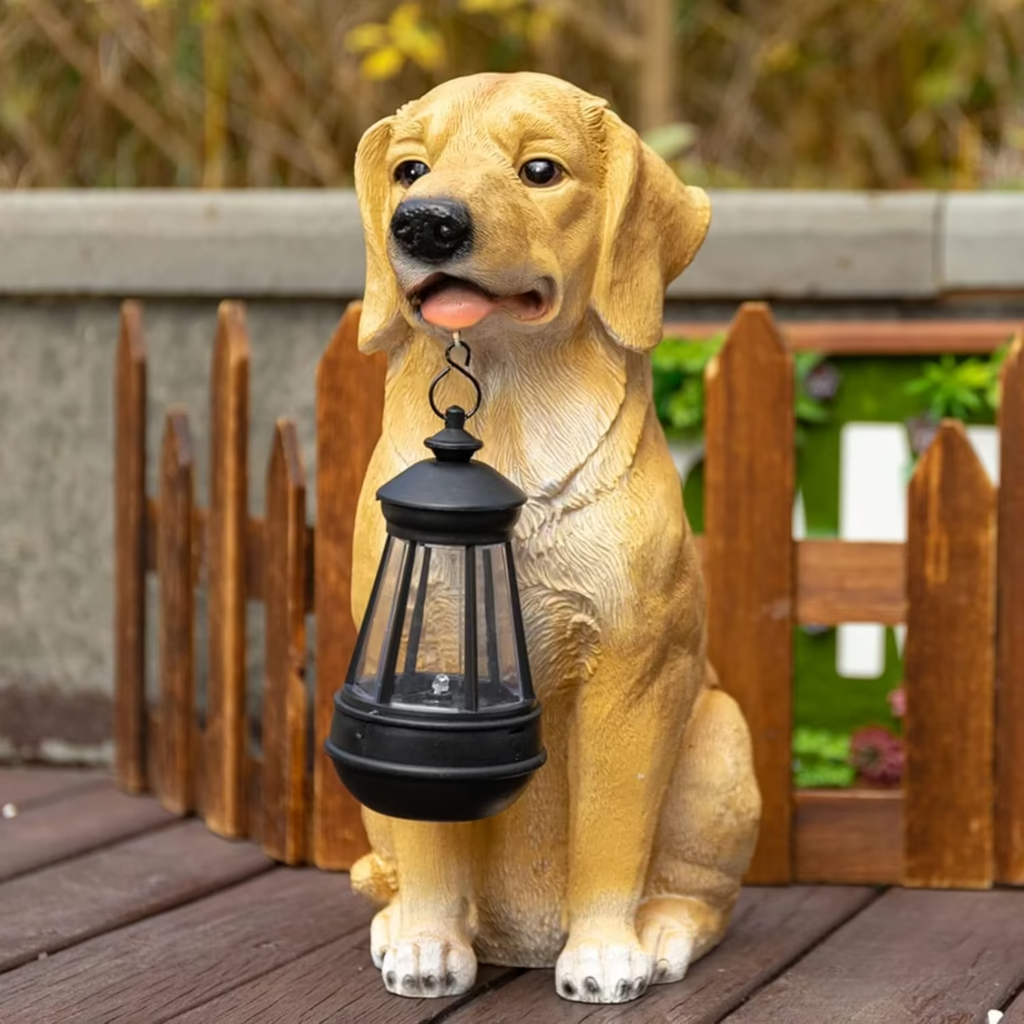
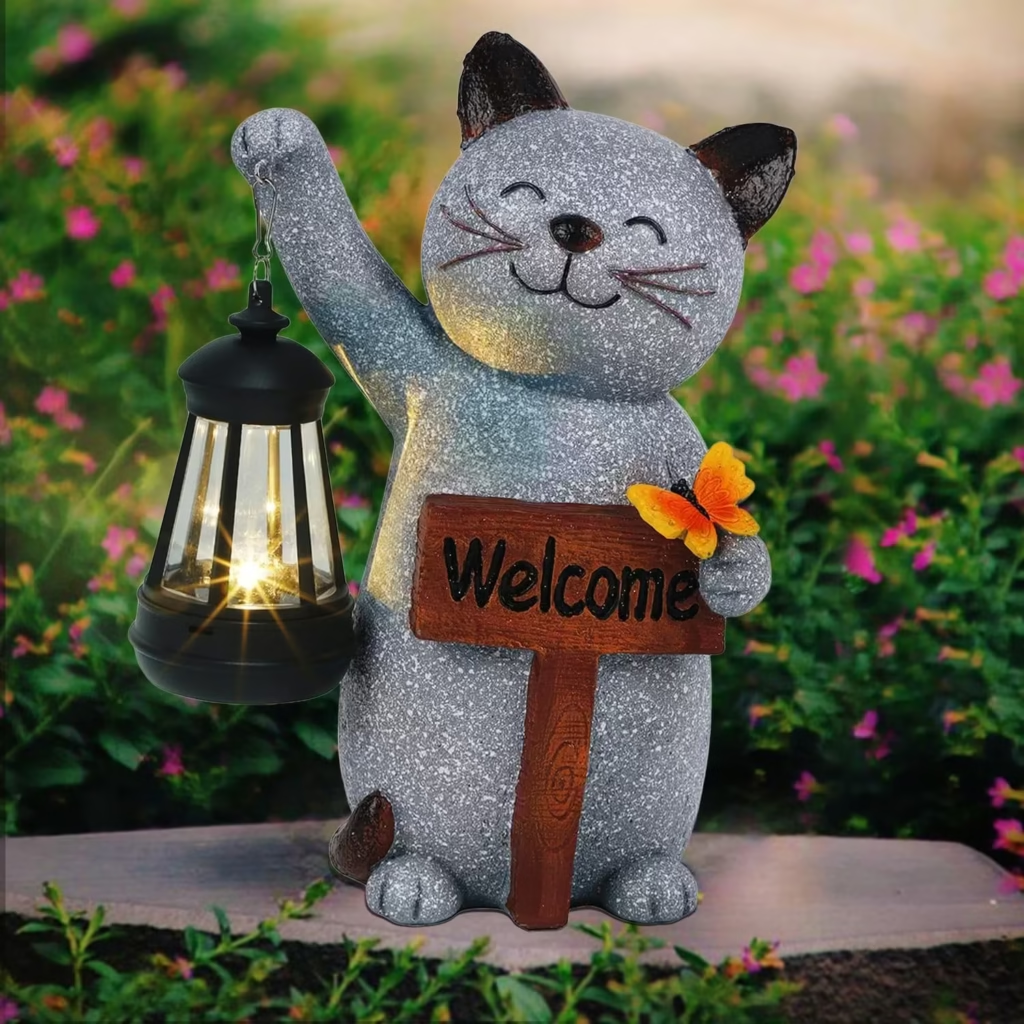
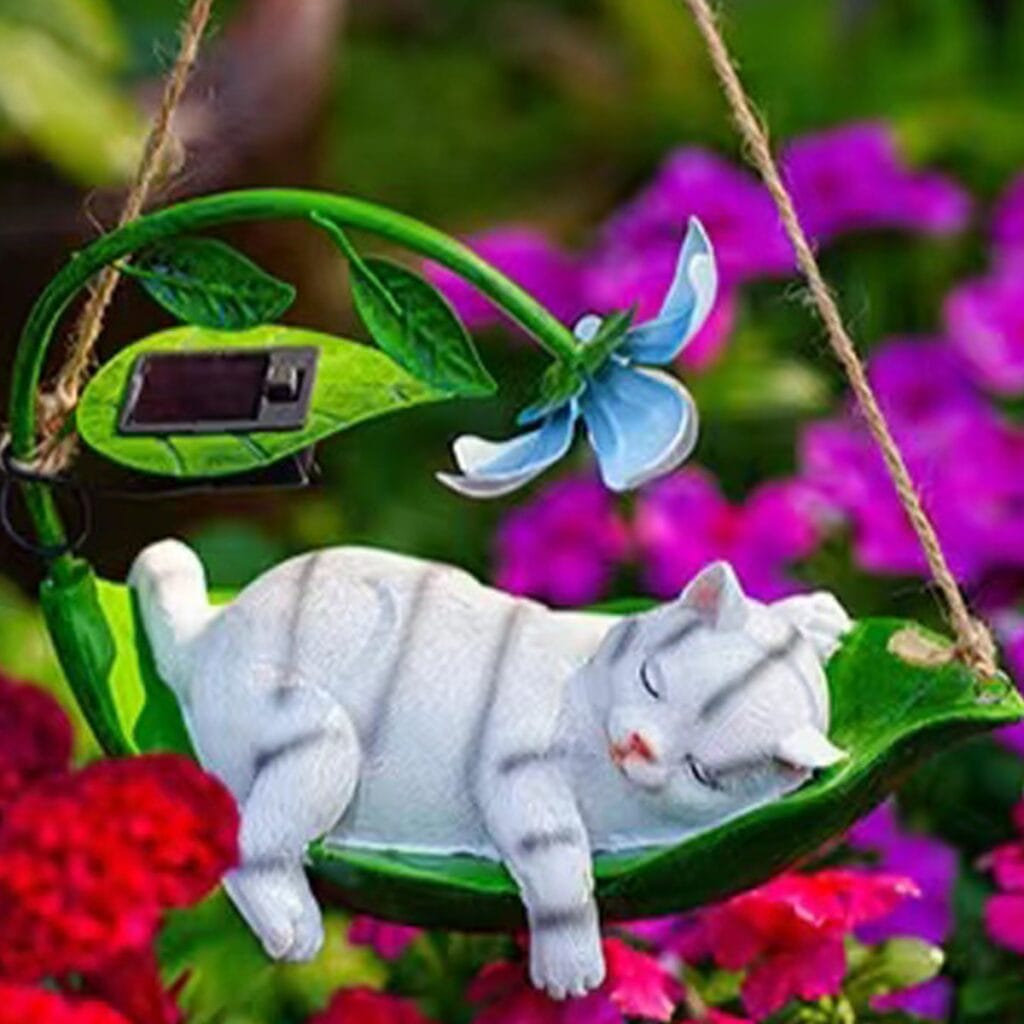
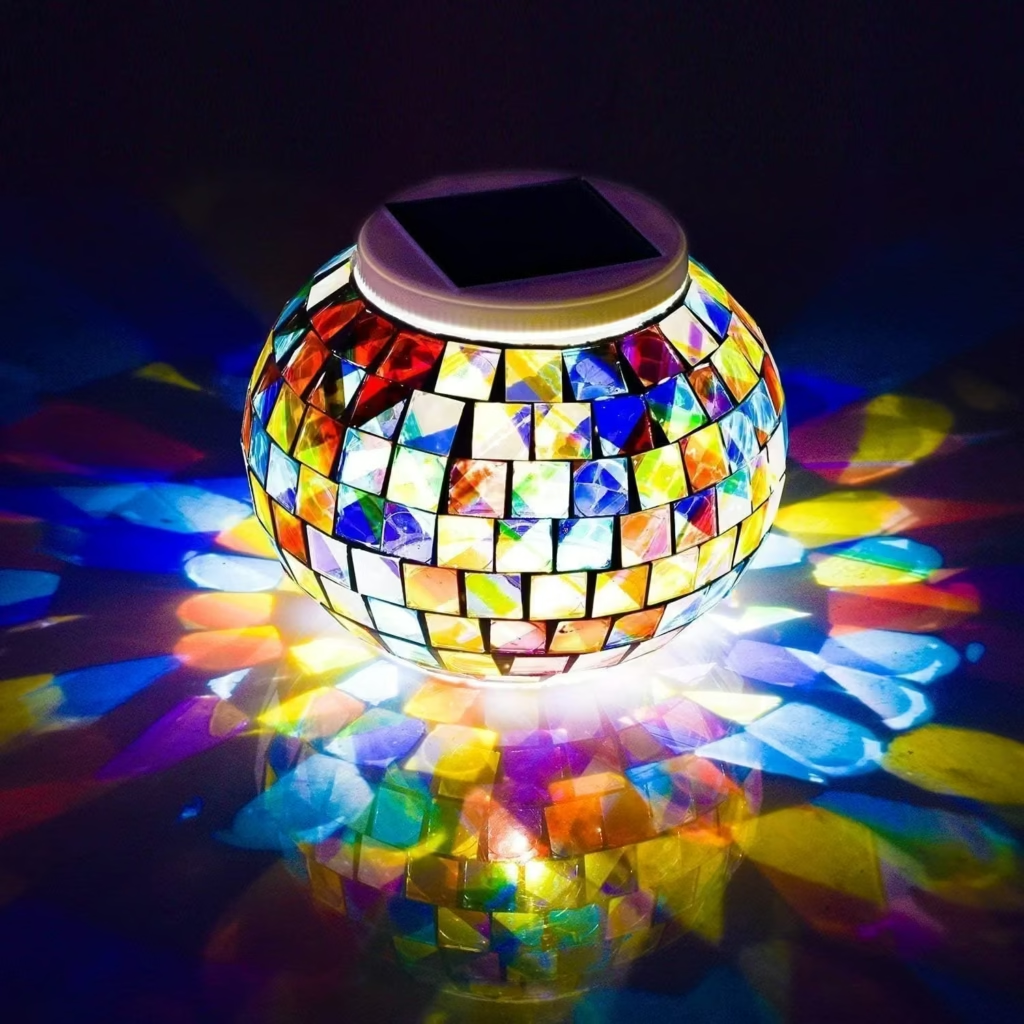
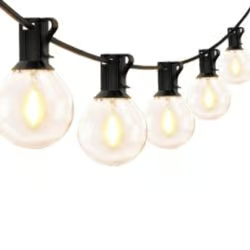
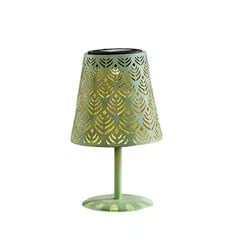
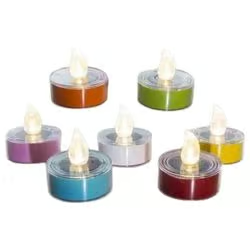
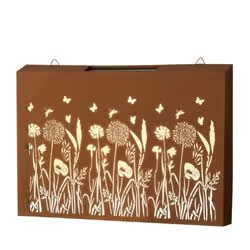

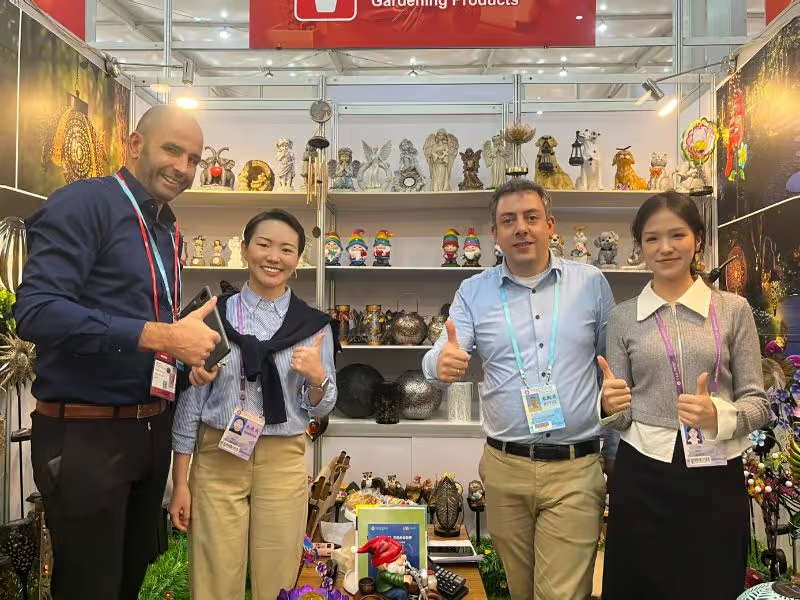
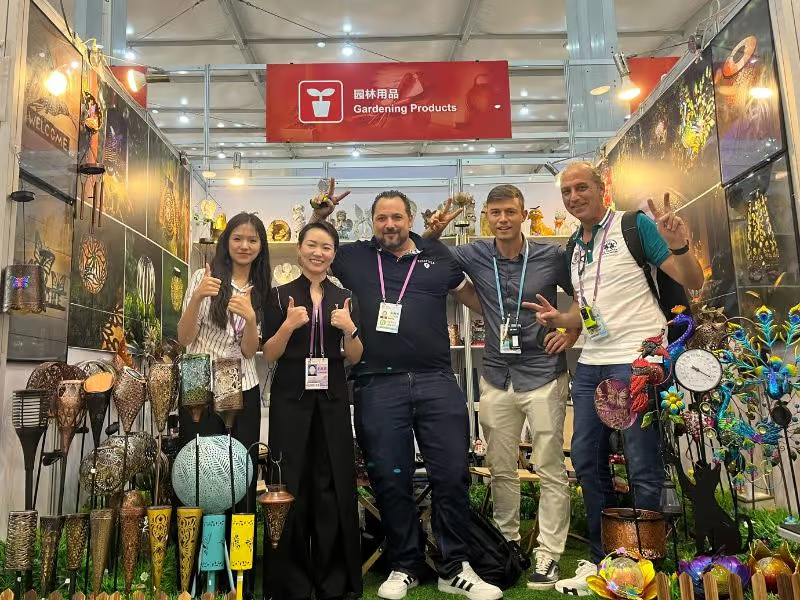
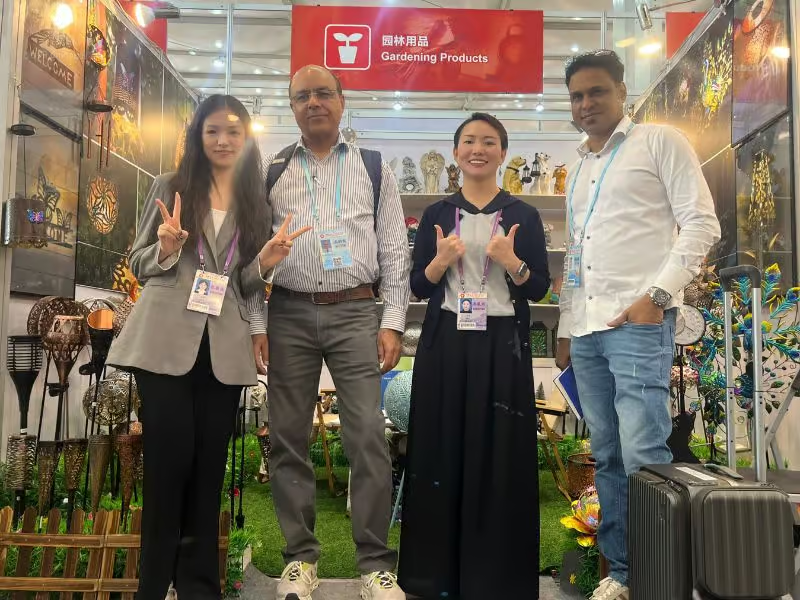
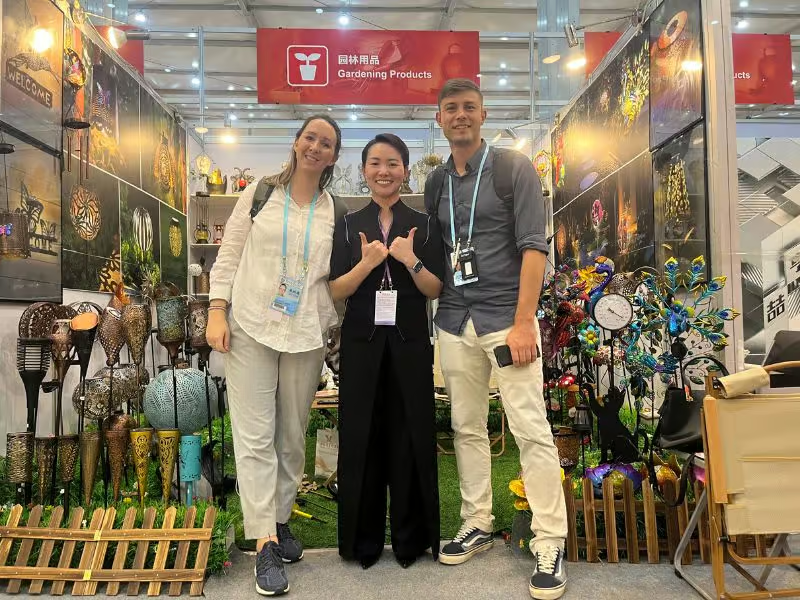
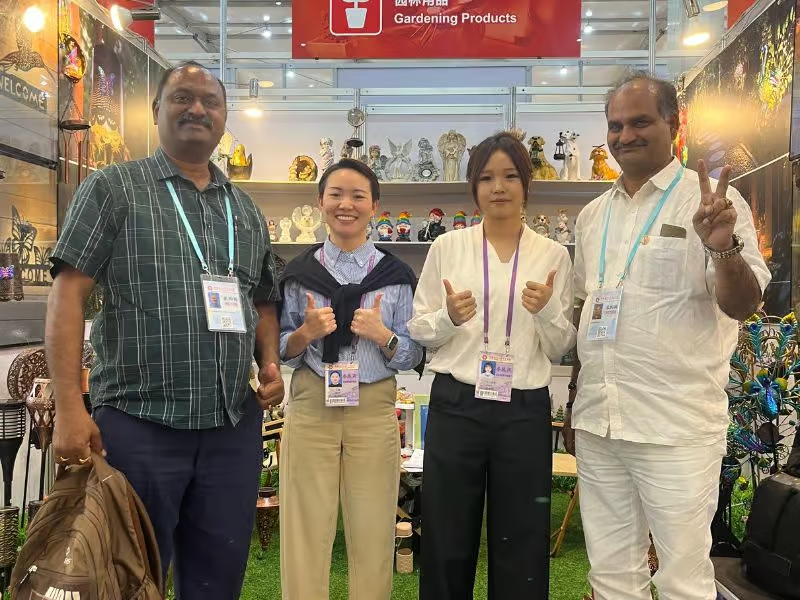
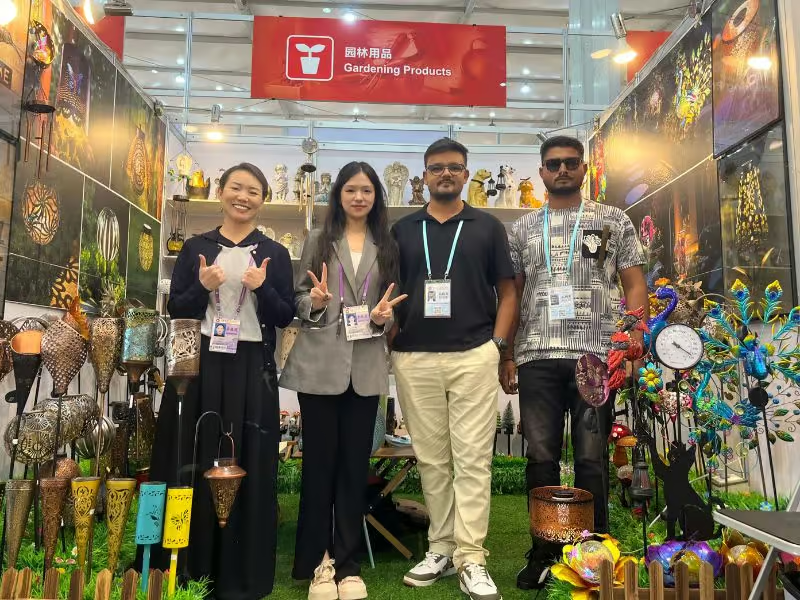
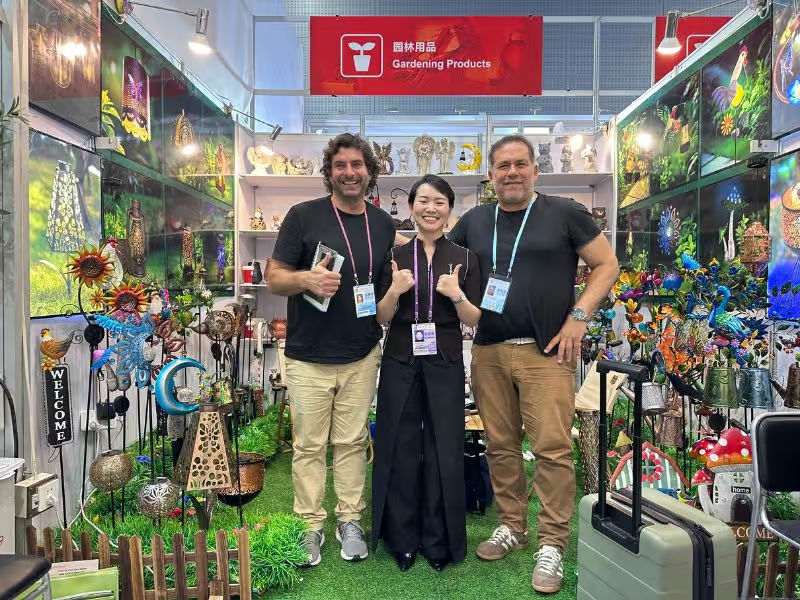
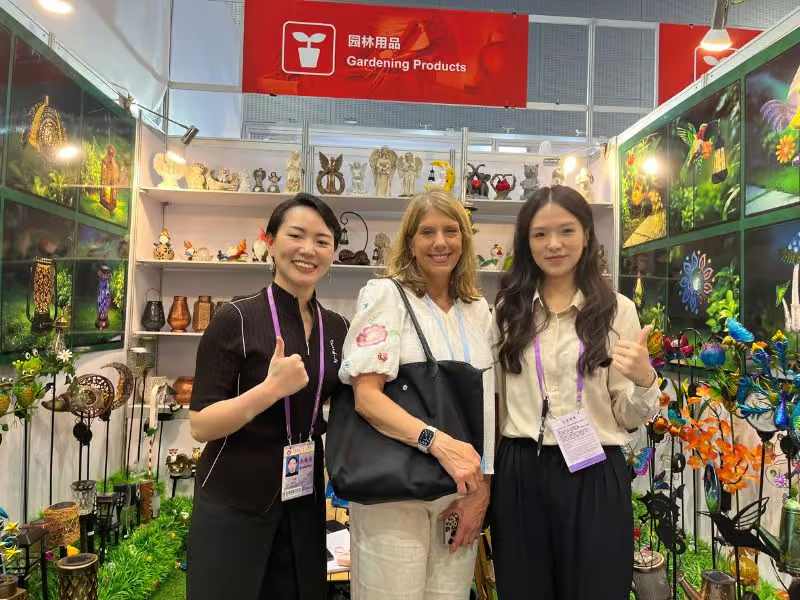
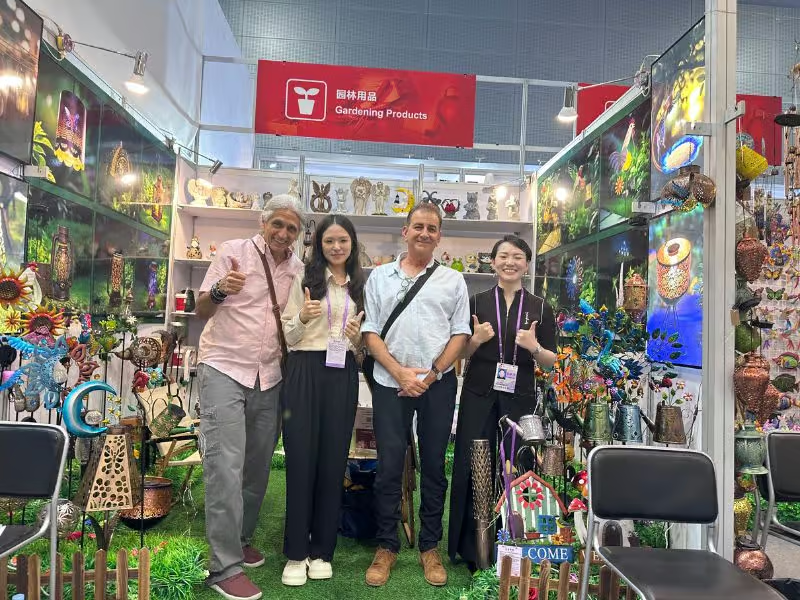
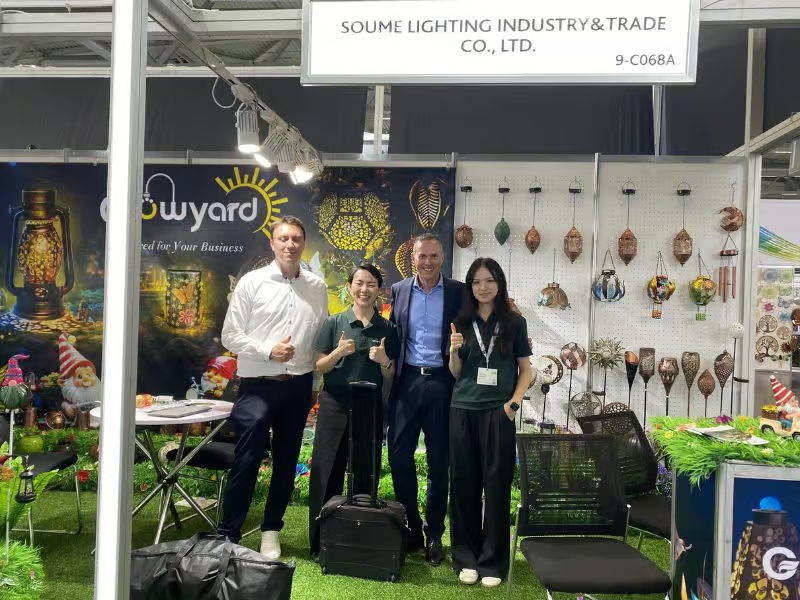
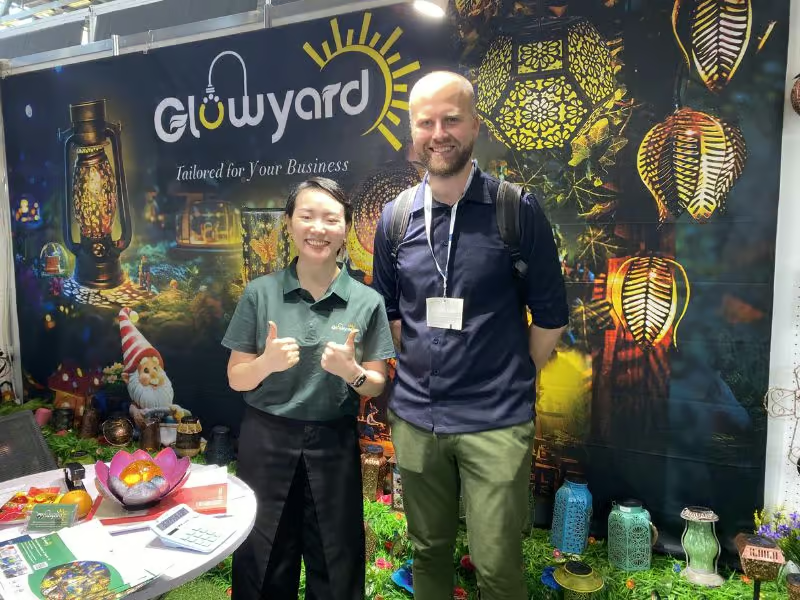
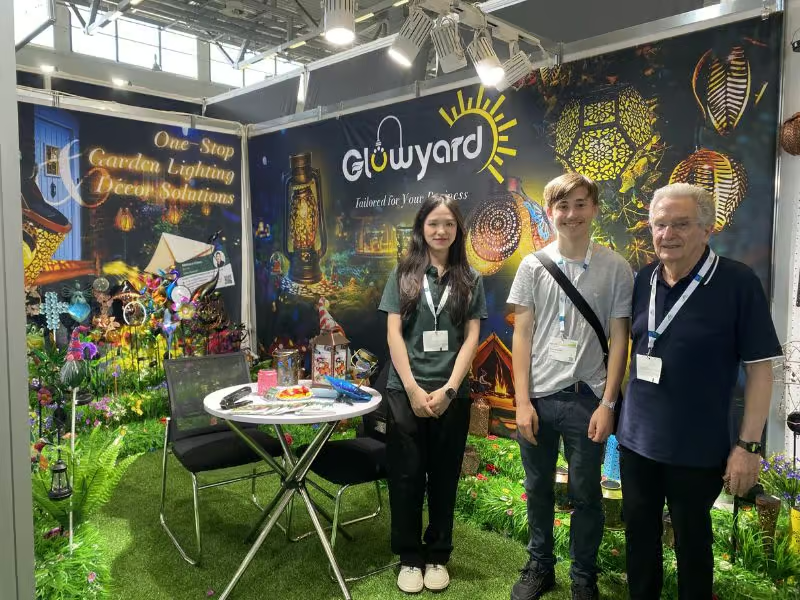
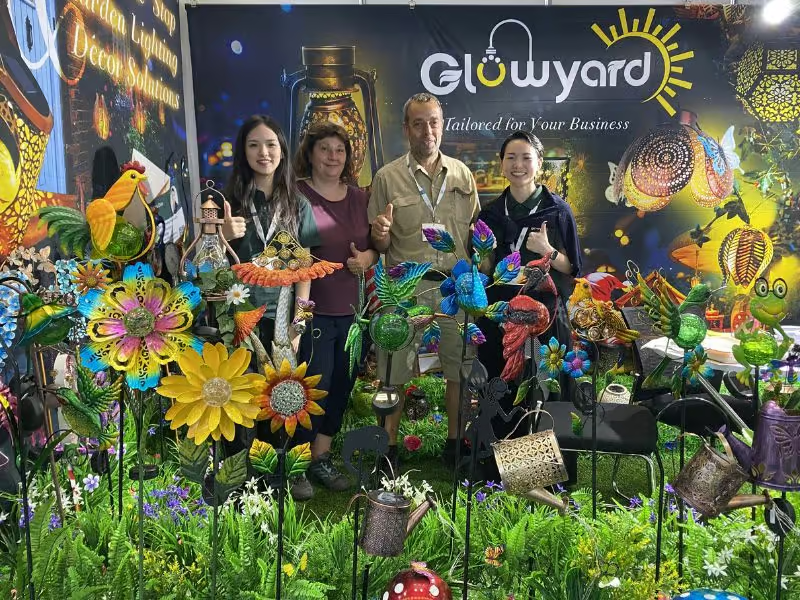
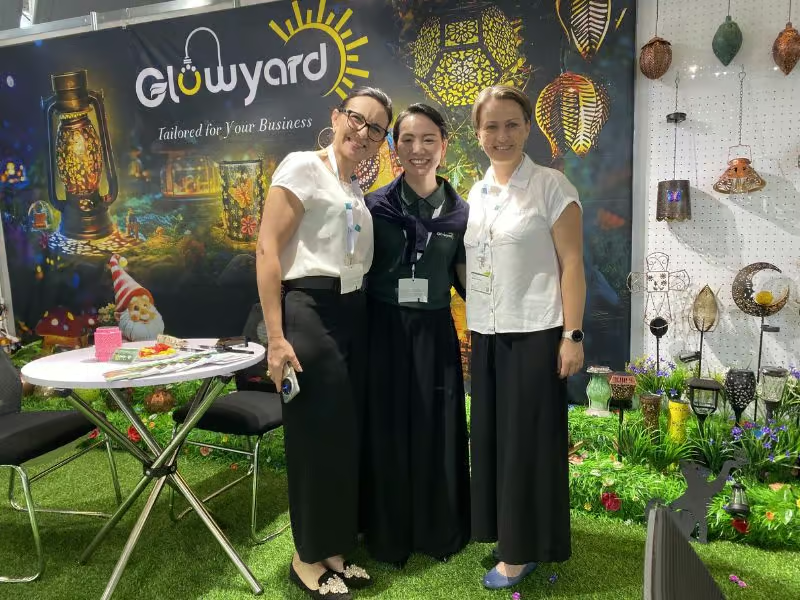










As a company focused on high quality and cost-efficiency, Glowyard Lighting's solar garden lights perfectly meet our needs. Their innovative design and professional service give us a competitive edge in the market." - Mark Shenng, Procurement Officer, Germany

Christina Tell
Glowyard Lighting’s solar garden lights have transformed our outdoor spaces with their reliability and elegant designs. Their commitment to sustainability and affordability aligns perfectly with our brand values. The exceptional customer support makes them a trusted partner for our business.

Kelvin Martin

 Decorative garden lights transform outdoor spaces into enchanting environments while providing functional illumination. Whether you’re a wholesaler sourcing for retail chains, an importer building a private label brand, or an e-commerce seller expanding your catalog, this comprehensive guide covers everything you need to know about decorative solar garden lights.
This buyer’s guide addresses both business considerations (MOQ, customization, certifications, pricing) and product knowledge (materials, designs, performance, installation) to help you make informed sourcing decisions. We’ve compiled insights from 15+ years of manufacturing experience, Google’s “People Also Ask” questions, and real B2B client inquiries.
Understanding Decorative Garden Lights: Types and Applications
What are decorative garden lights and how do they differ from functional outdoor lighting?
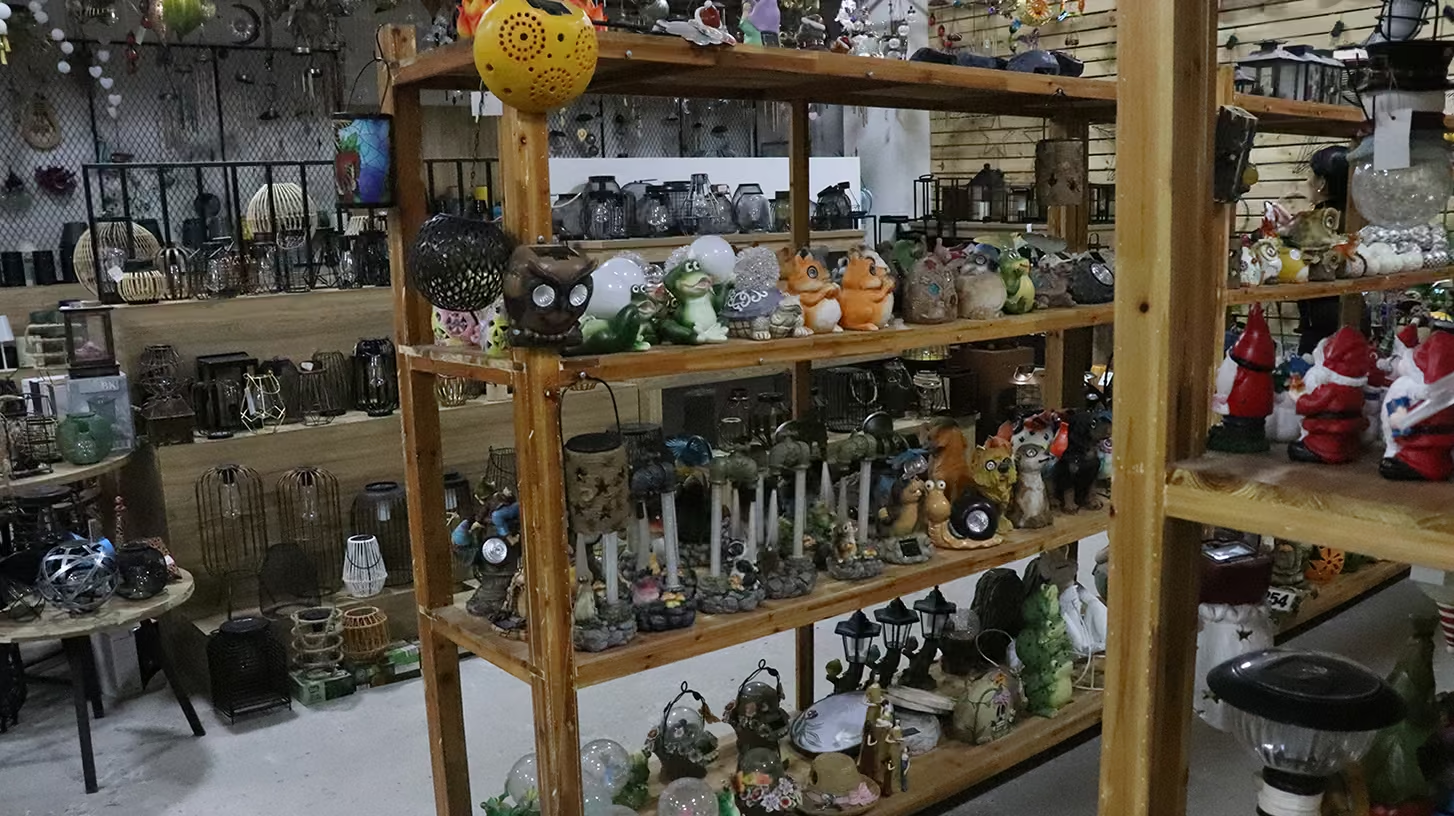
Decorative garden lights prioritize aesthetic appeal and ambiance creation over pure illumination. Unlike security floodlights or task lighting, decorative garden lights typically feature:
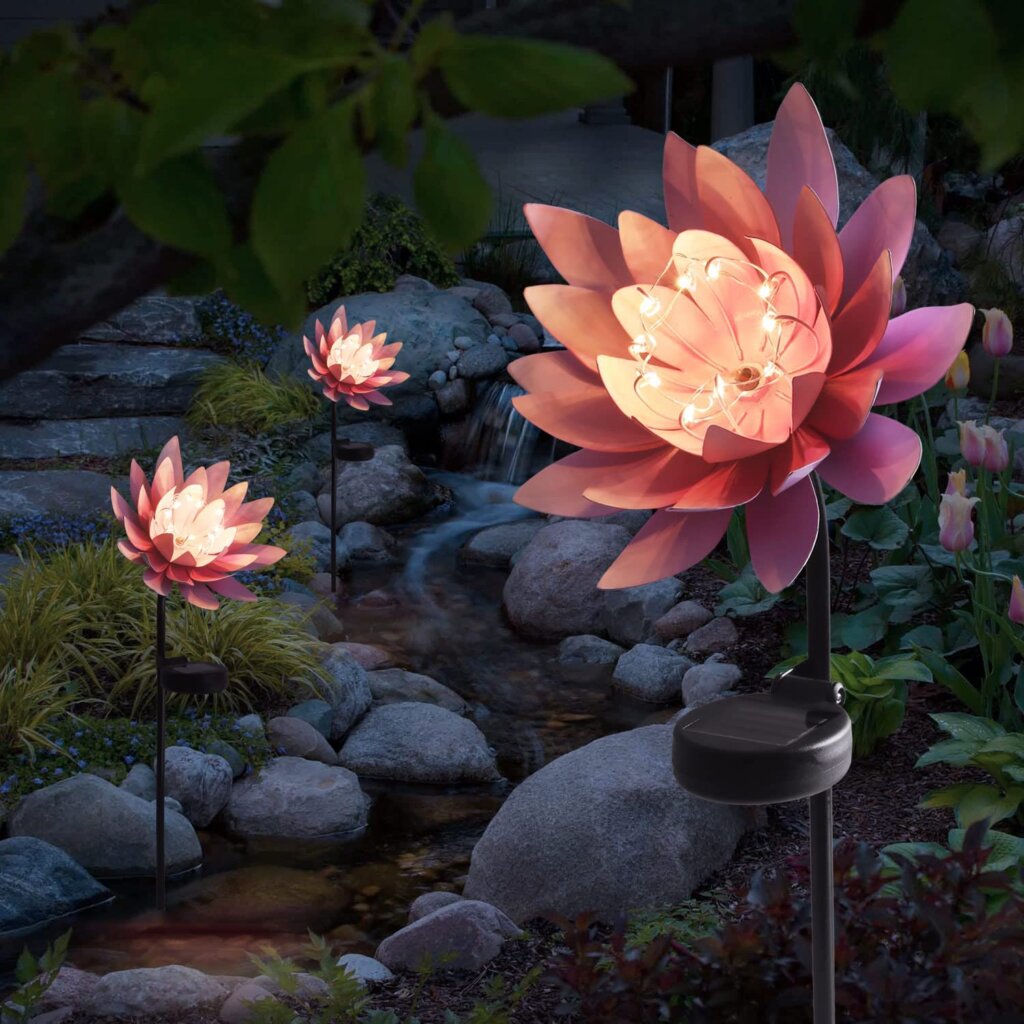
- Artistic designs – sculptural forms, themed shapes (animals, flowers, abstract art)
- Softer illumination – warm ambient glow rather than bright task lighting
- Visual interest during daytime – attractive even when not lit
- Variety of installation methods – stakes, hanging, wall-mounted, tabletop
For B2B buyers, decorative garden lights occupy the premium-to-mid-range segment where customers value design and quality over lowest price. This positioning allows for better margins compared to commodity functional lighting.
What are the main types of decorative garden lights available for wholesale?
Decorative garden lights can be categorized by installation method and design style:
By Installation Method:
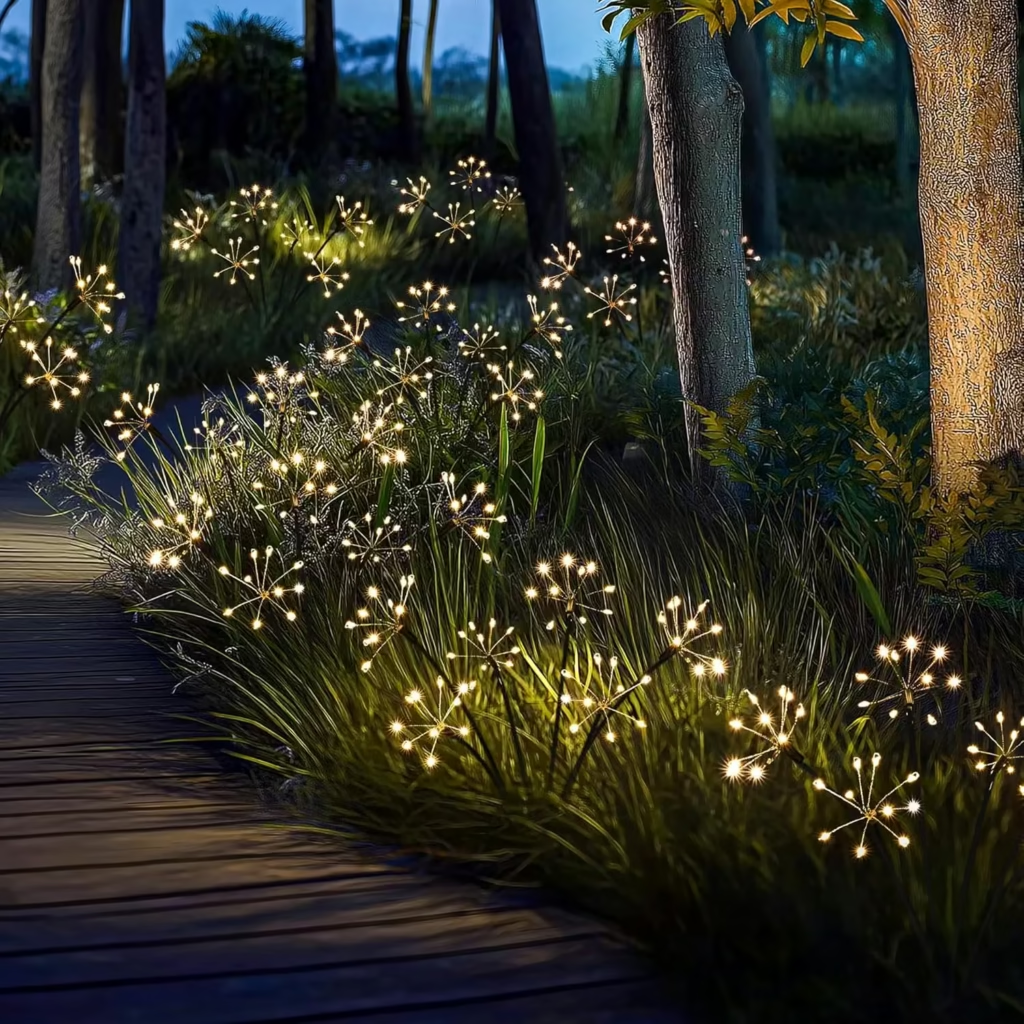
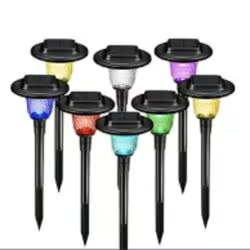
- Garden stake lights – ground-mounted with stakes, easy to reposition
- Pathway lights – low-profile markers for walkways and borders
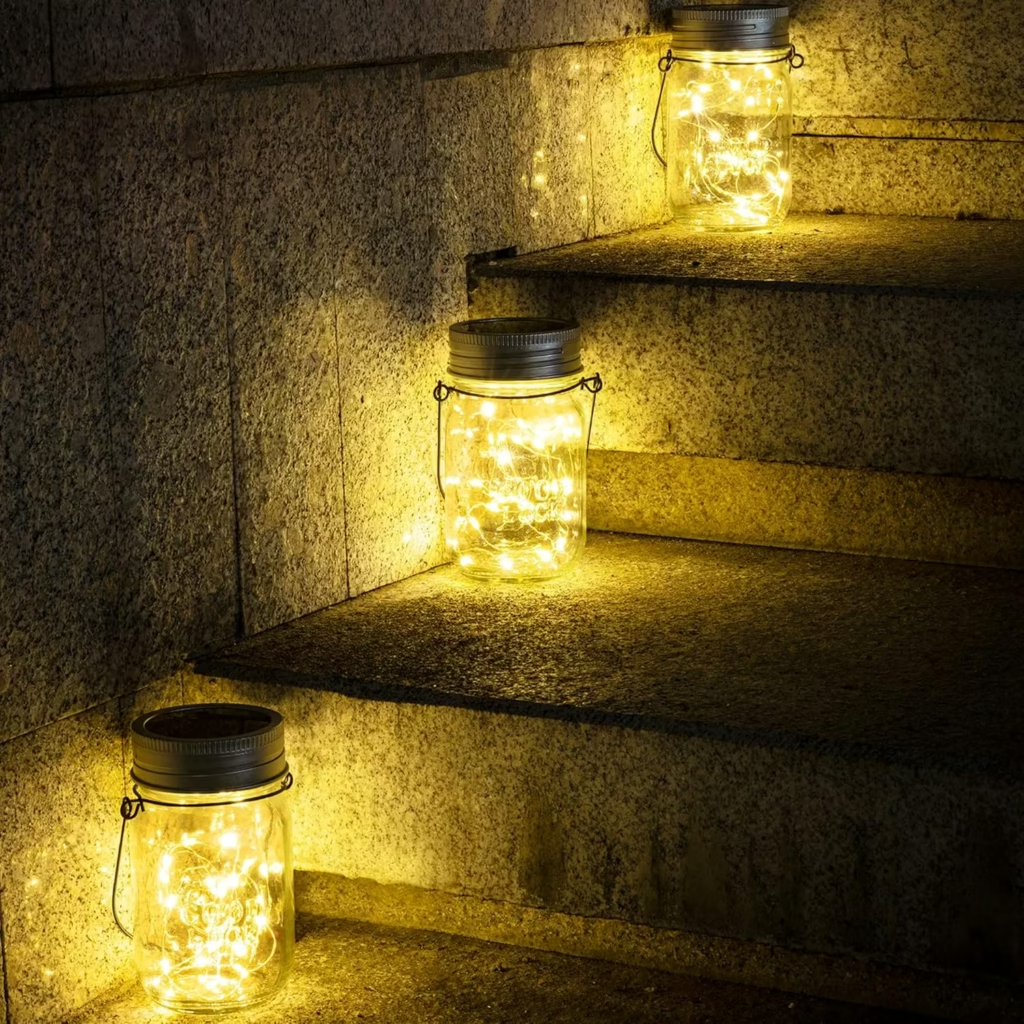
- Hanging lights – lanterns and pendants for trees, pergolas, hooks
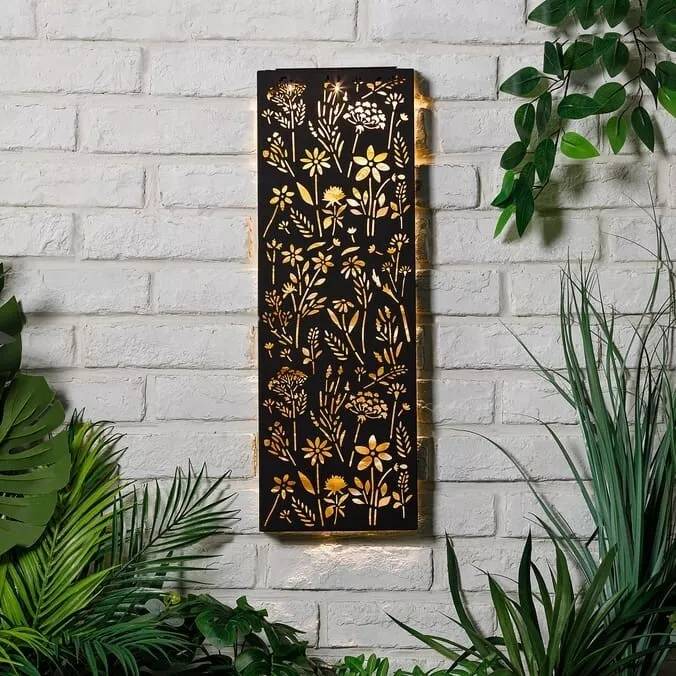
- Wall-mounted lights – decorative sconces and brackets
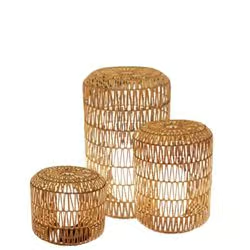
- Tabletop lights – portable decorative pieces for patios and tables
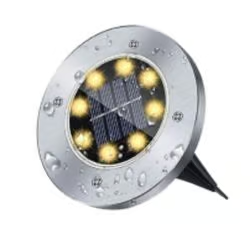
- In-ground lights – flush-mounted uplights for dramatic effects
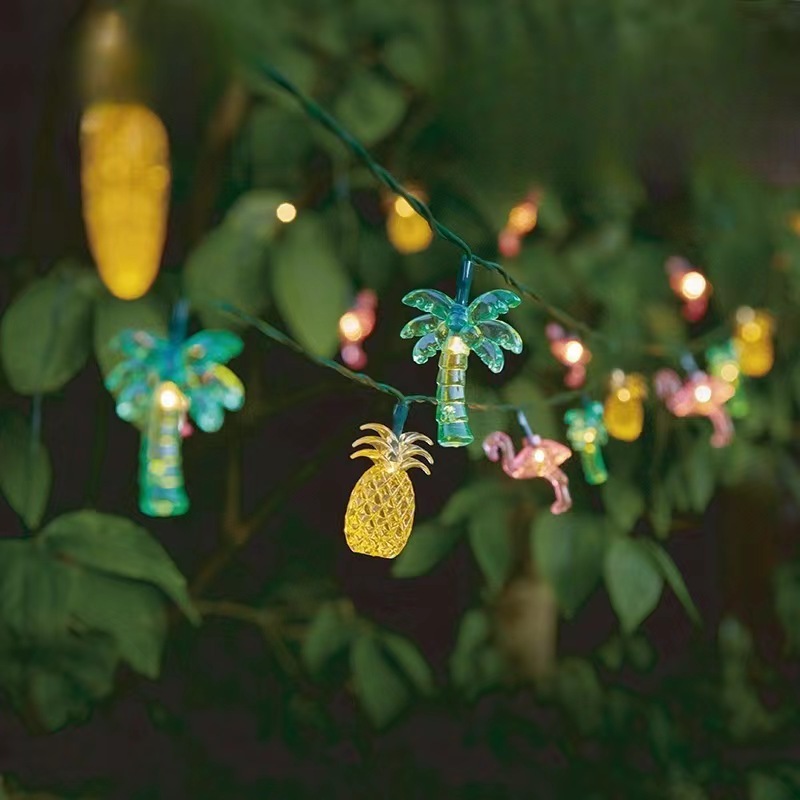
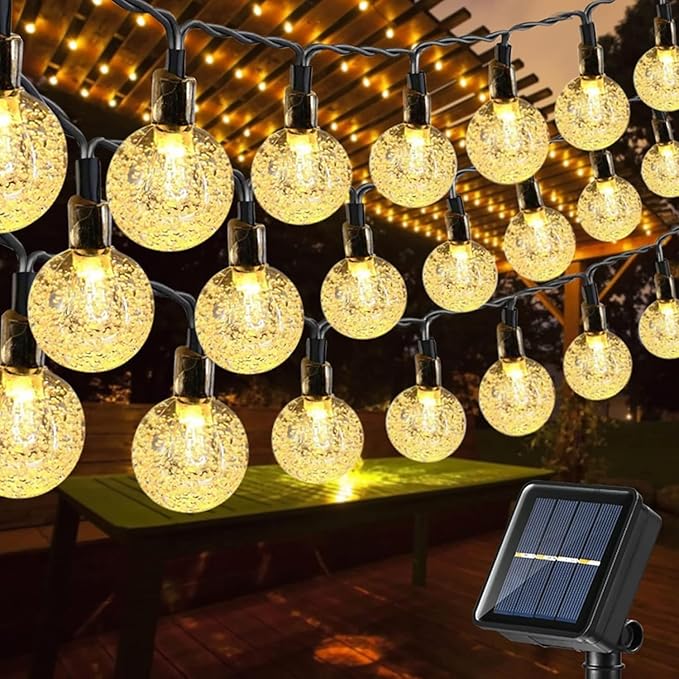
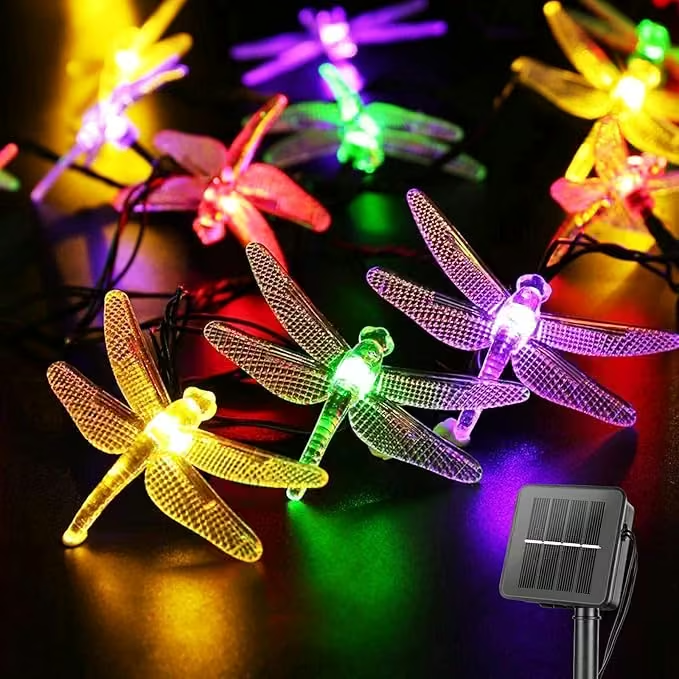
- String lights – connected decorative bulbs for festive atmospheres
By Design Style:
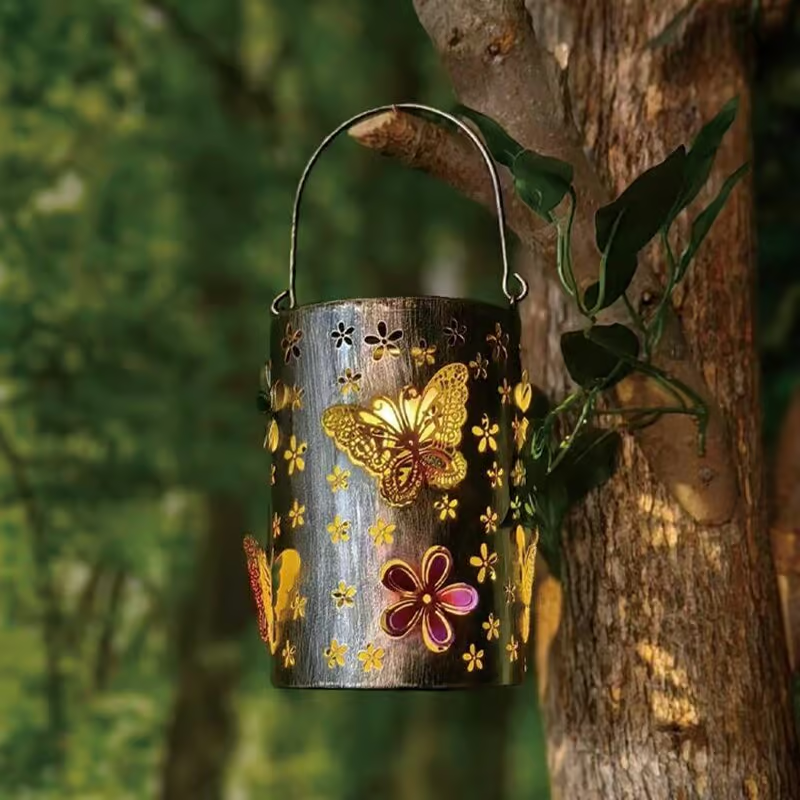
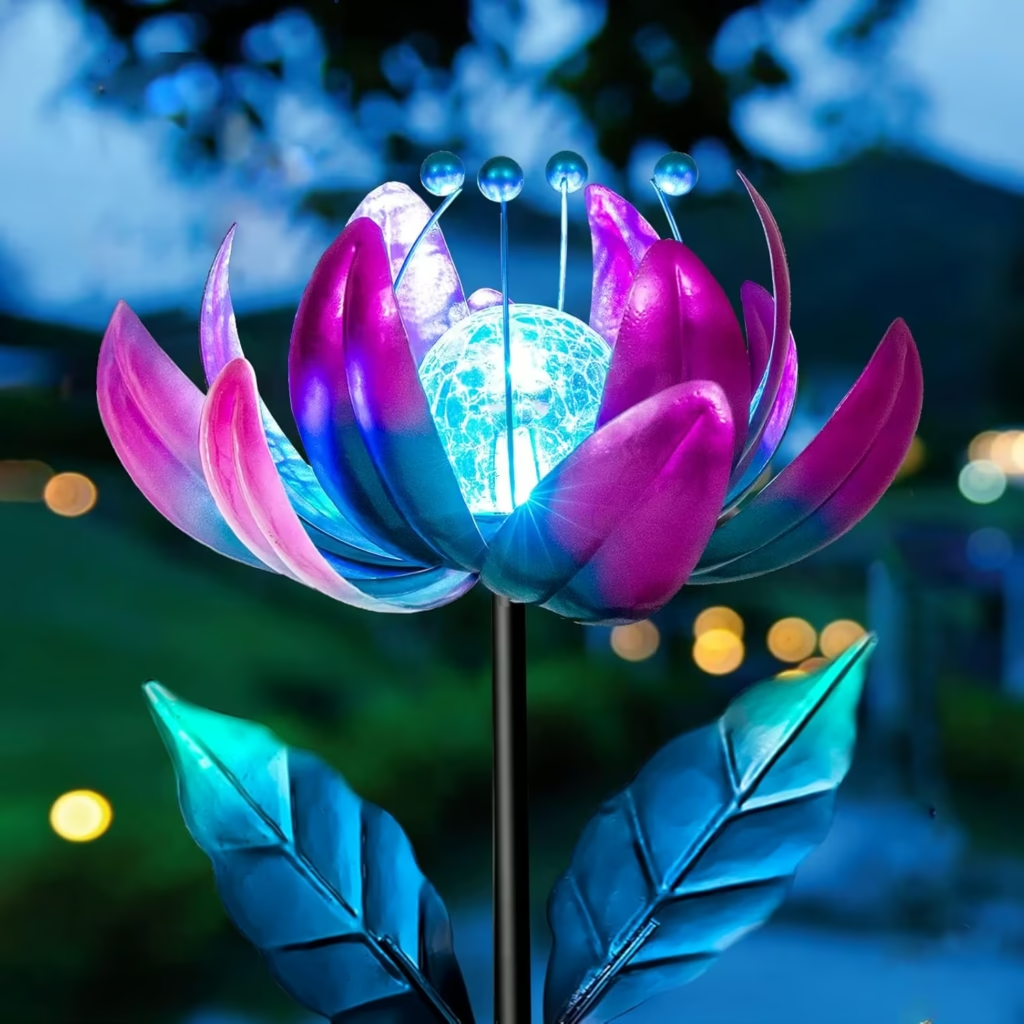
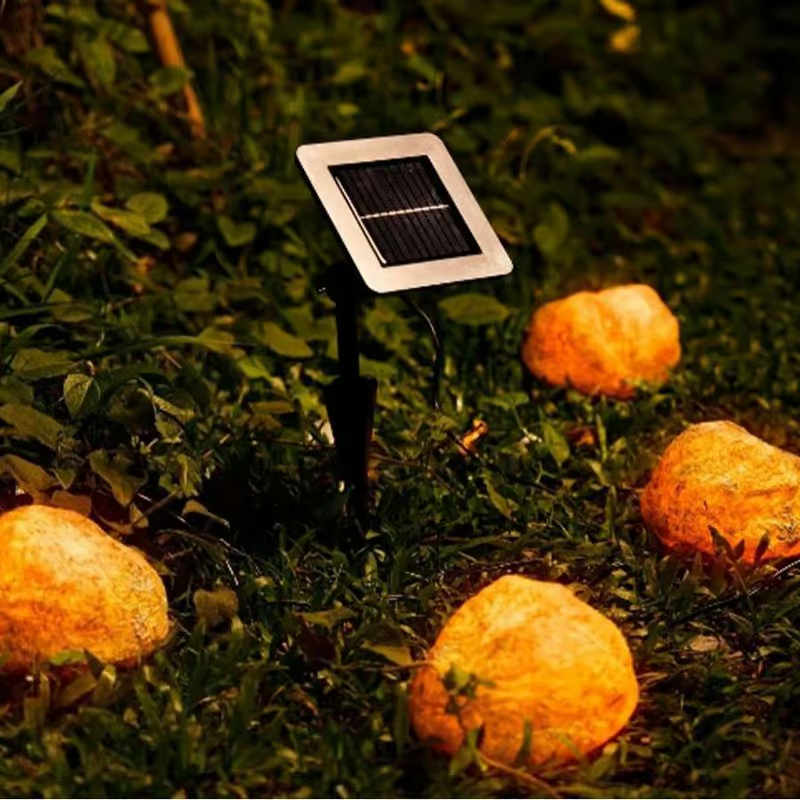
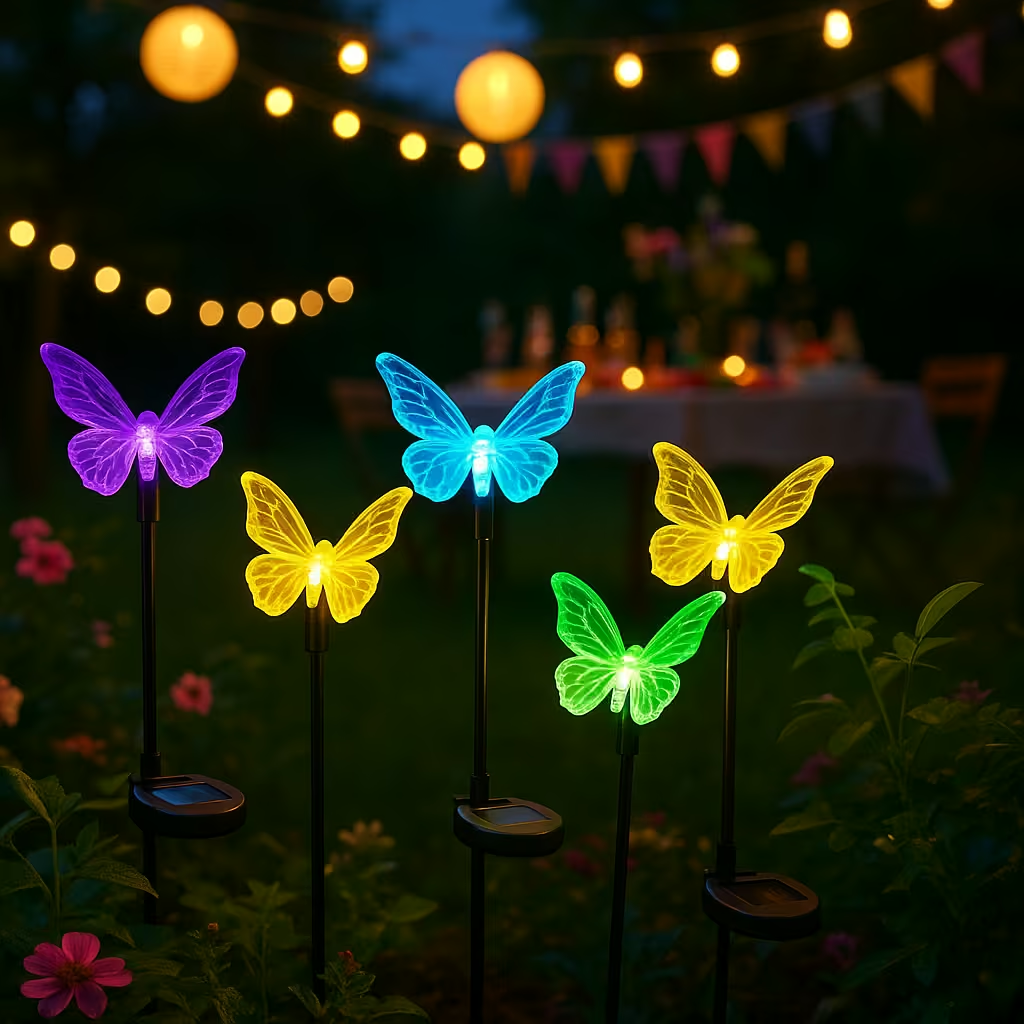
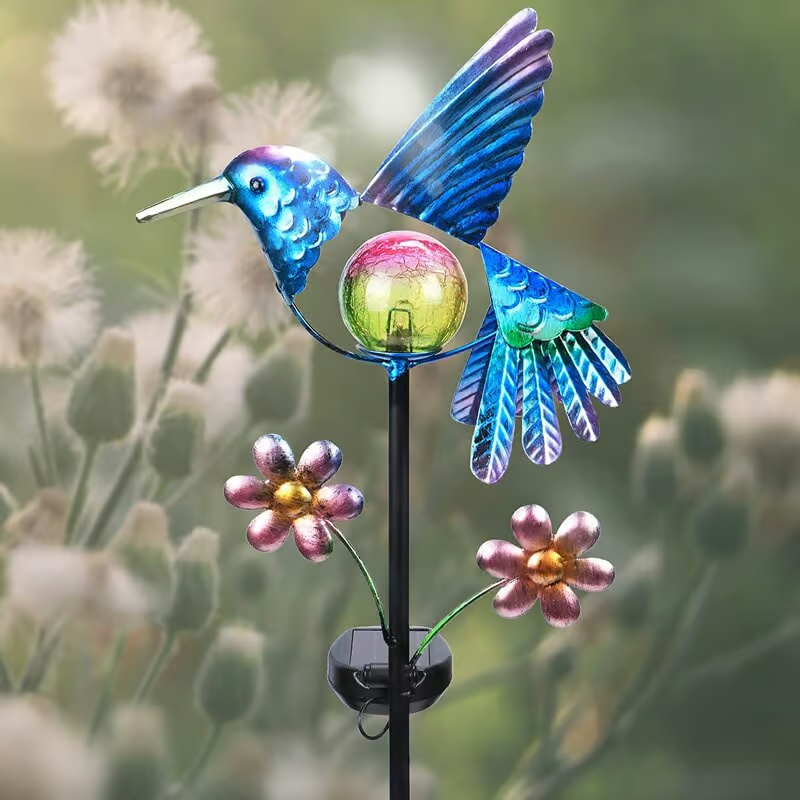
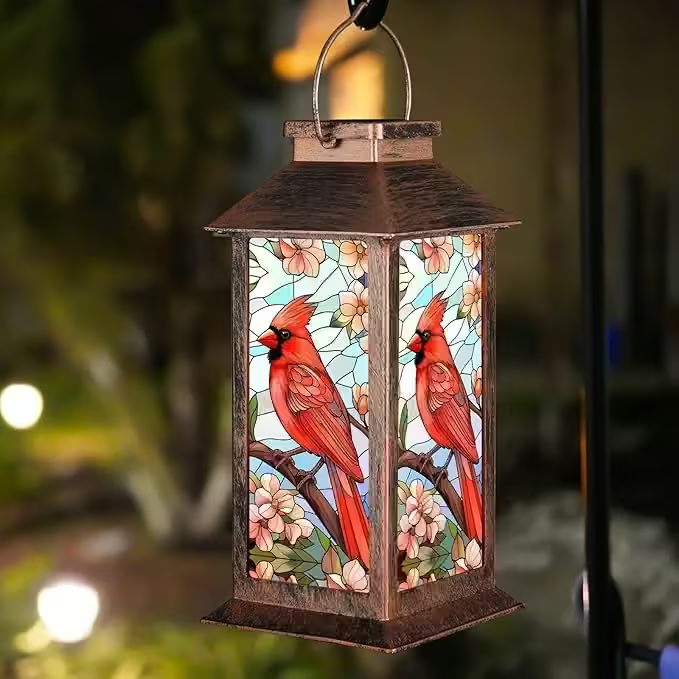
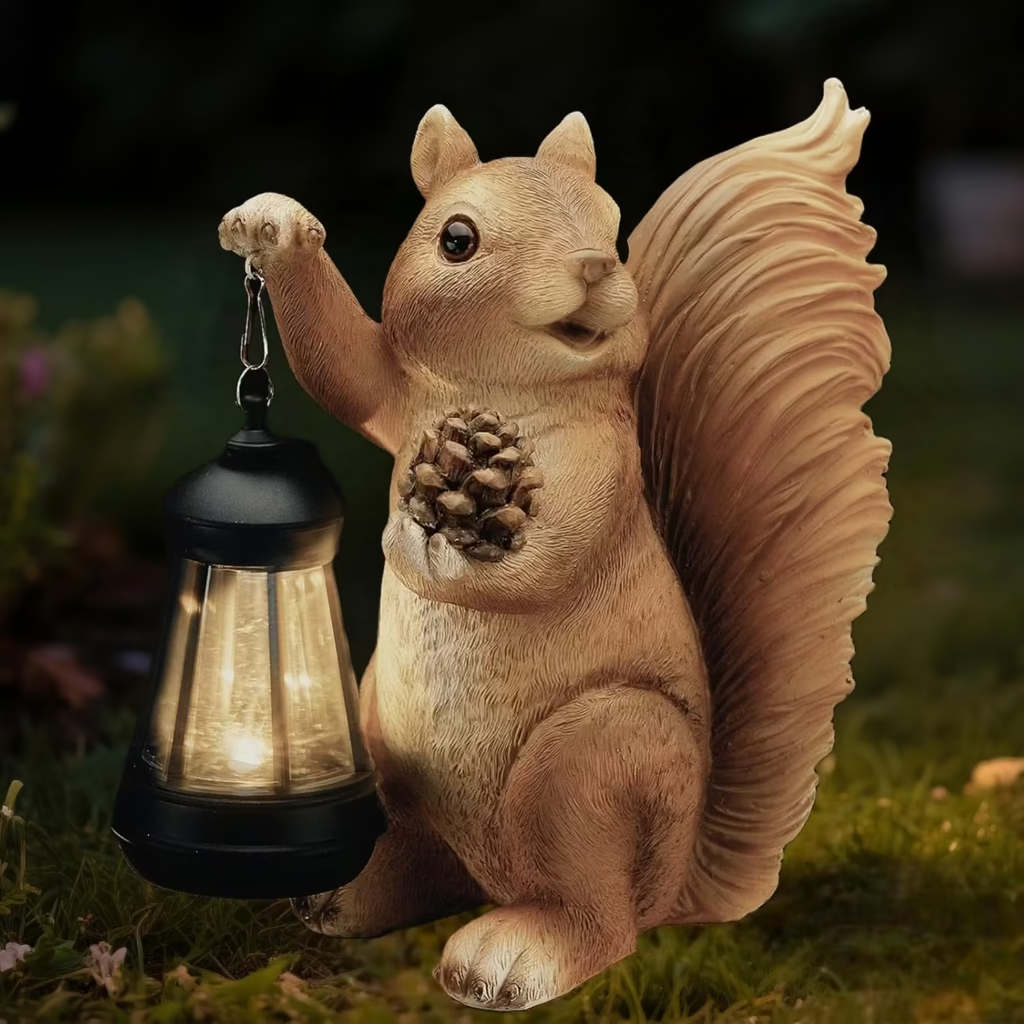
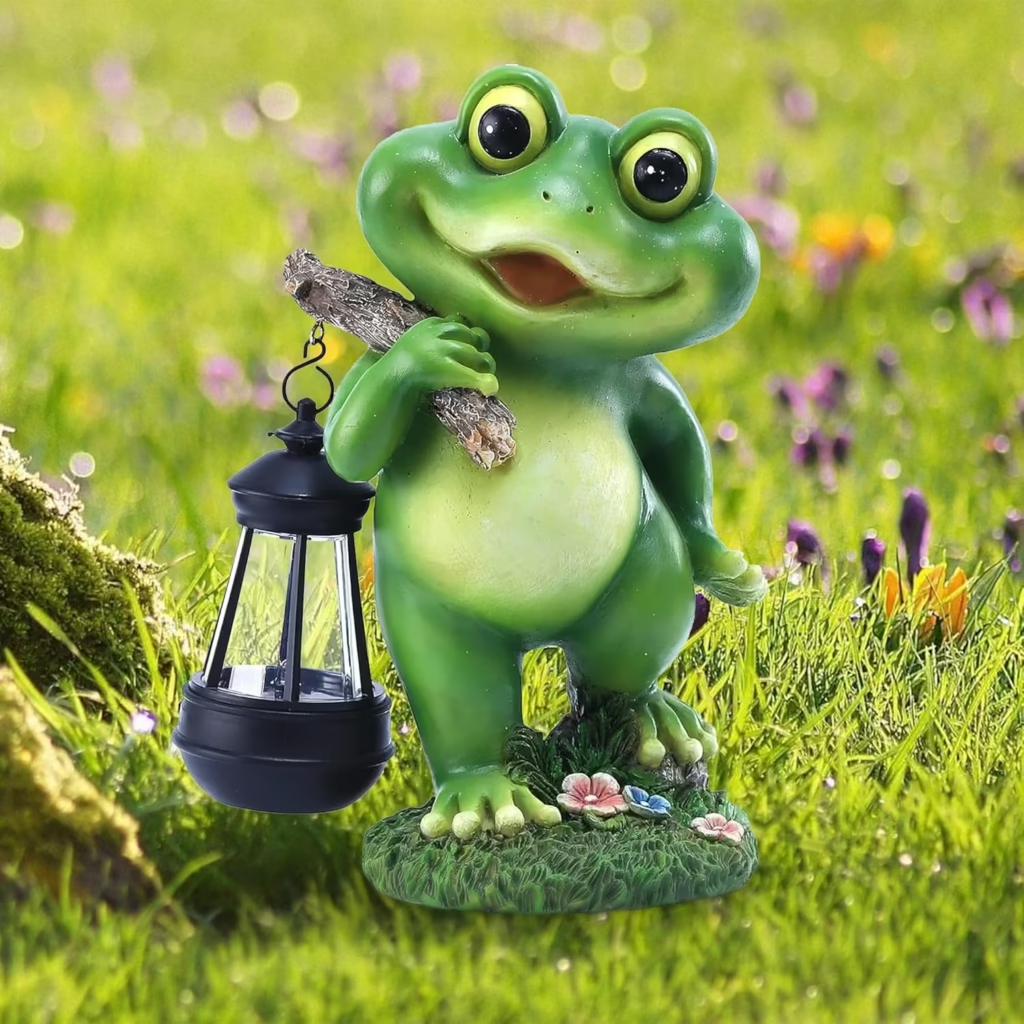
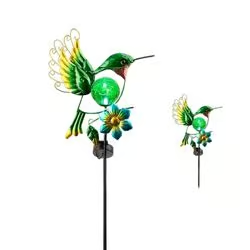
- Animal and nature themes – butterflies, birds, dragonflies, flowers
- Sculptural and abstract – modern geometric forms, artistic pieces
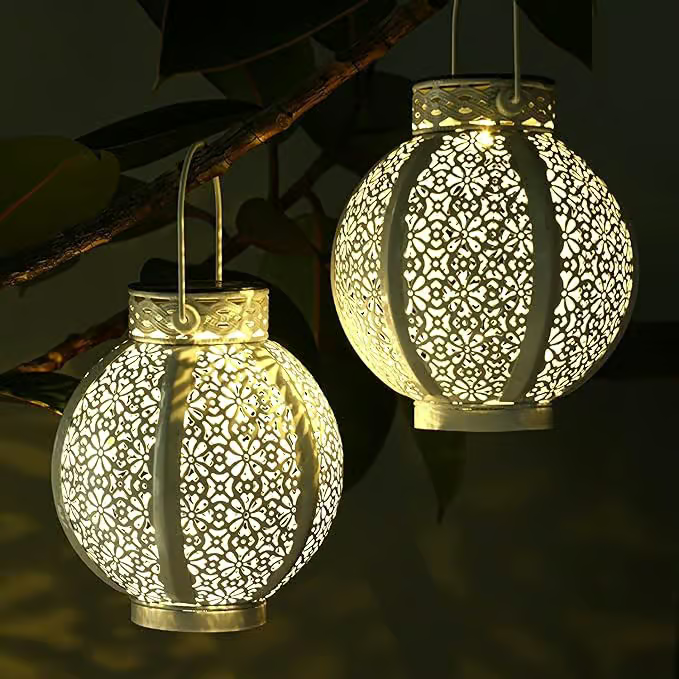
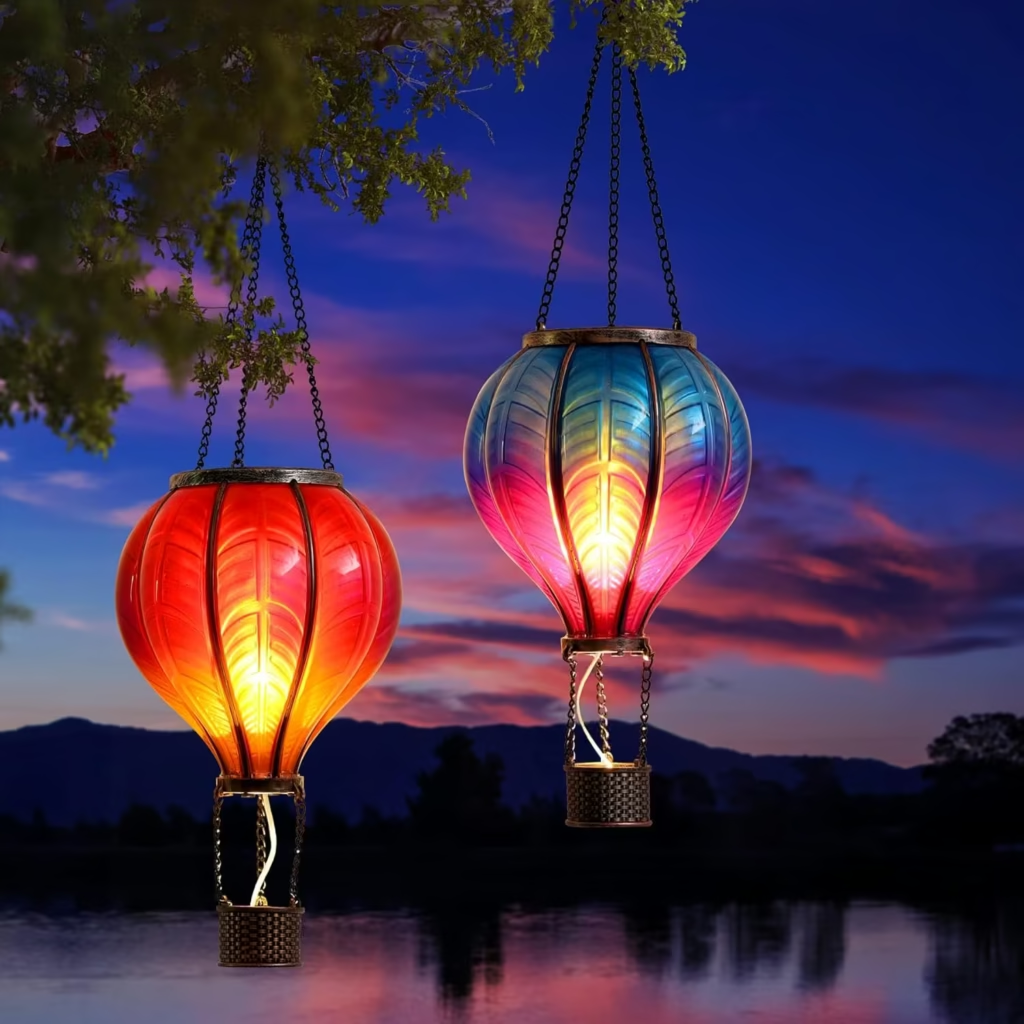
- Traditional lanterns – classic coach-style, Moroccan, Asian-inspired
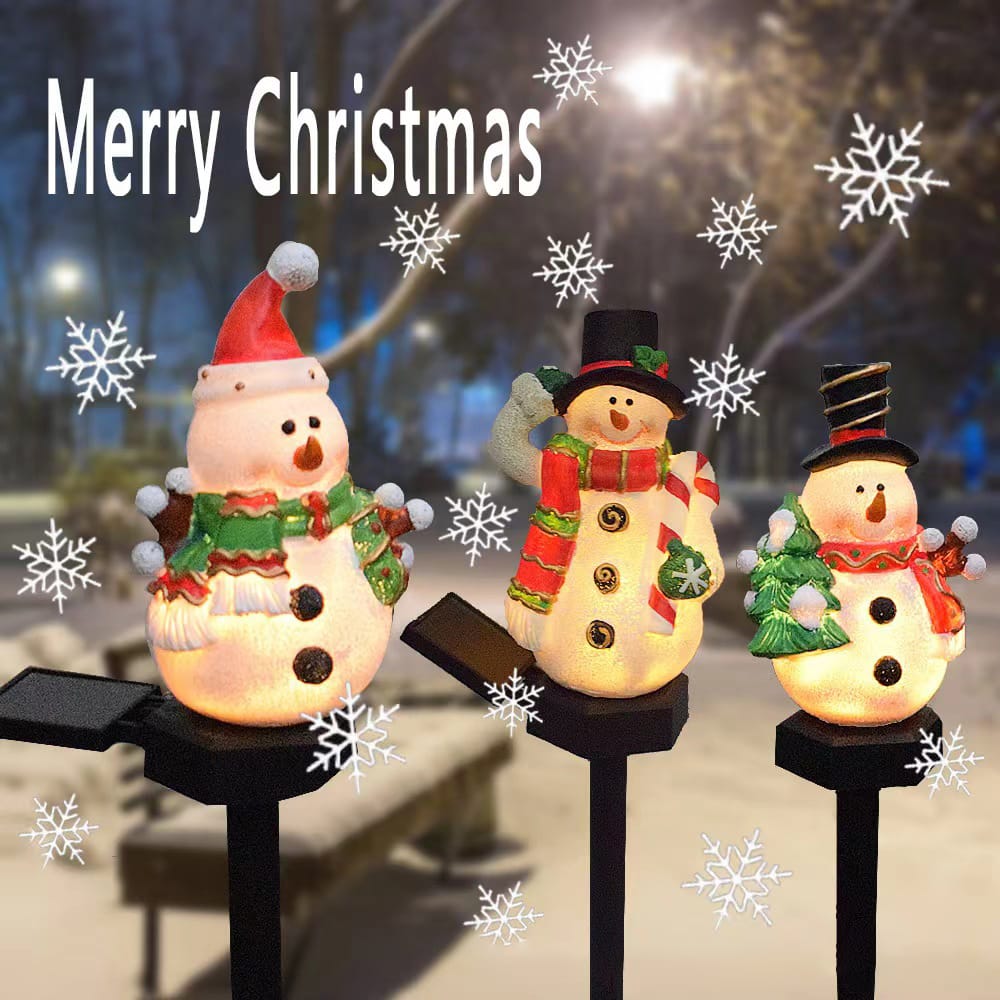
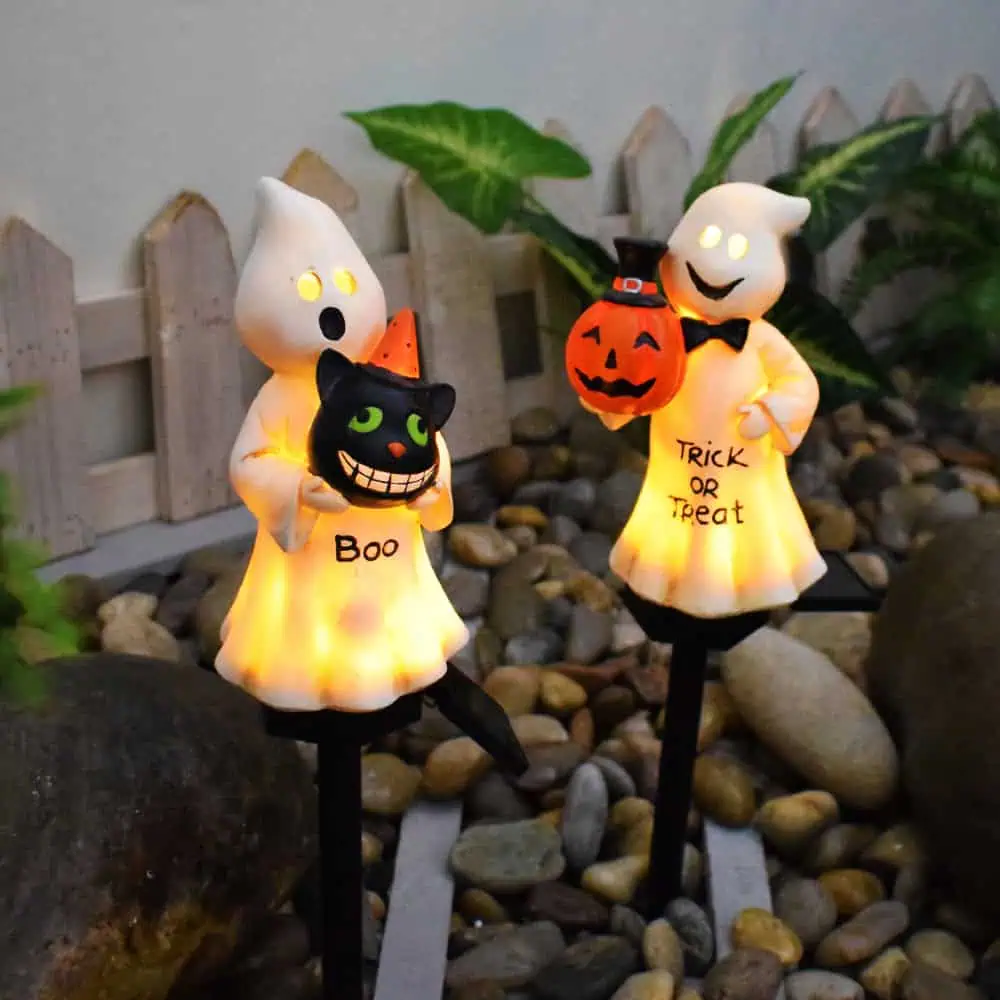
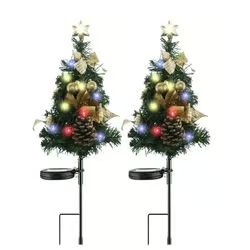
- Seasonal and holiday – Christmas, Halloween, Easter themes
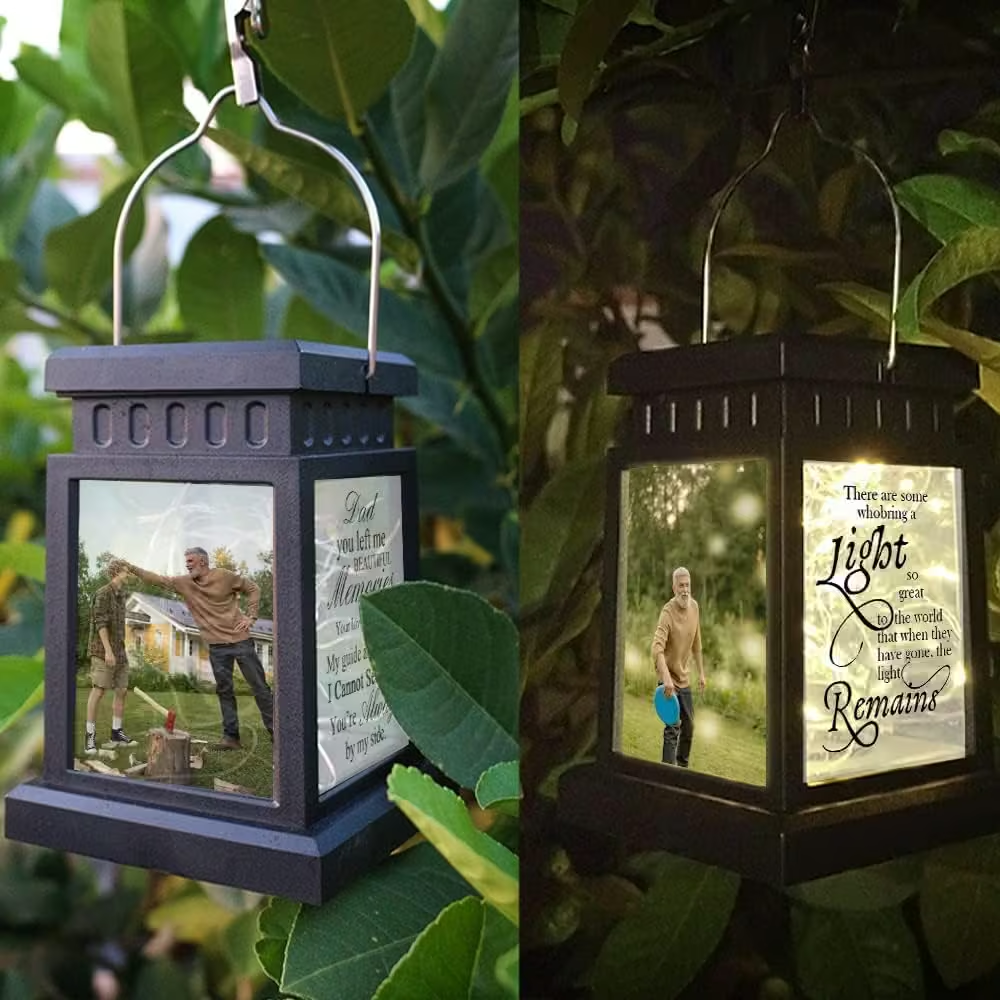
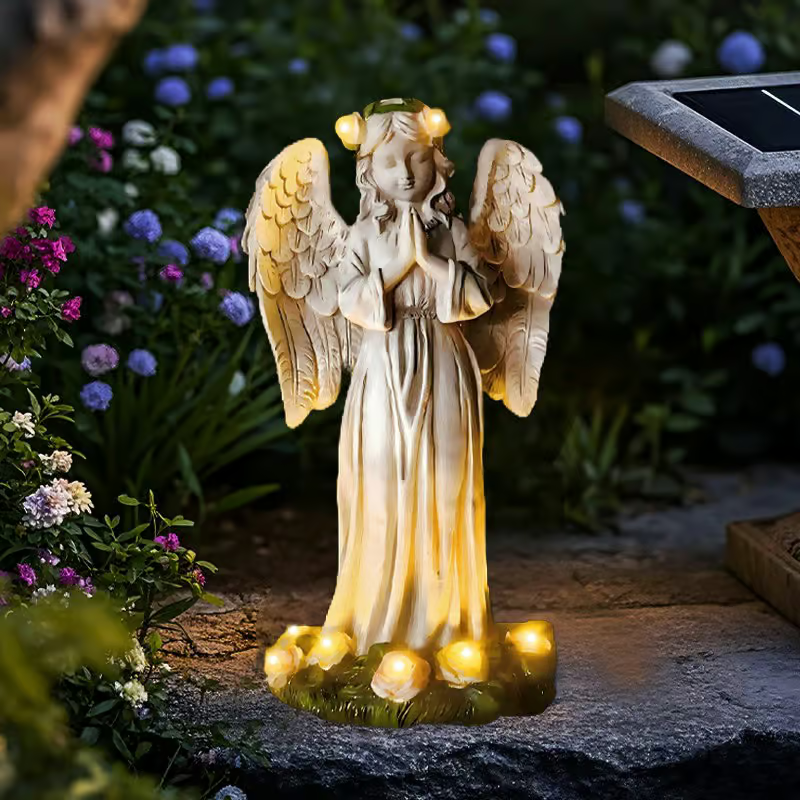
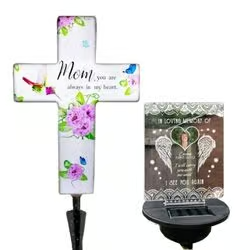
- Memorial and spiritual – angels, crosses, remembrance designs
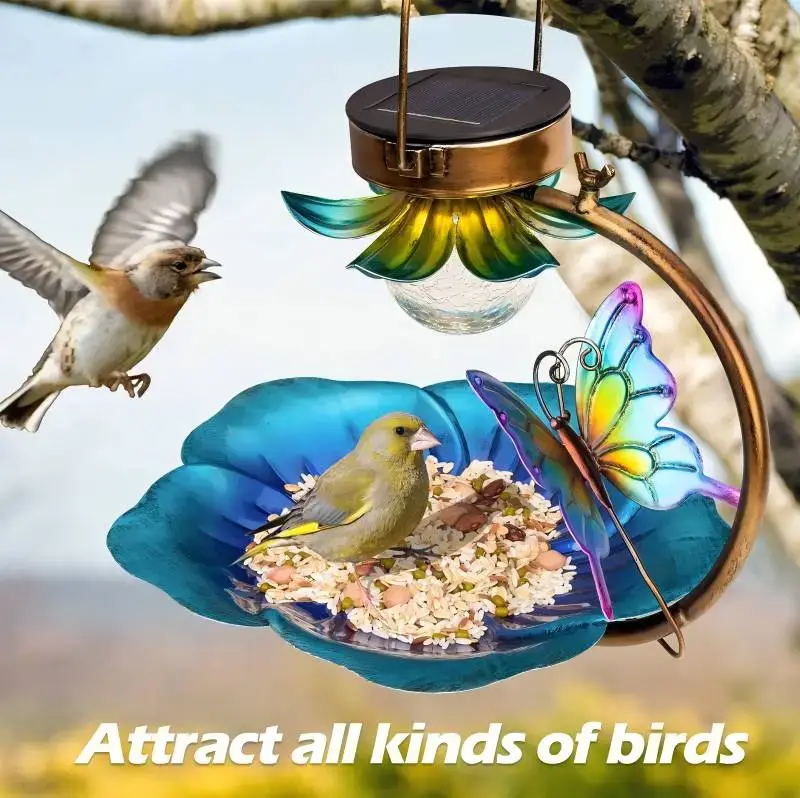
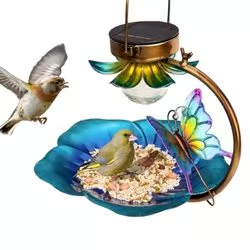
- Functional-decorative hybrids – birdfeeders, planters, water features with lights
Understanding these categories helps you build a balanced product assortment that serves different customer needs and price points.
Which decorative garden light styles are most popular in different markets?
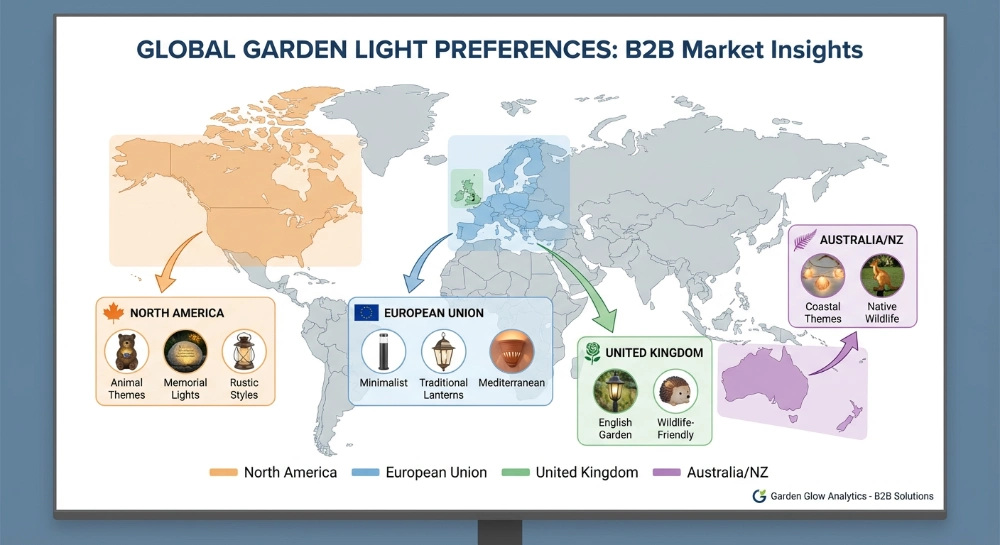
Market preferences vary significantly by region:
North America (US & Canada):
- Animal and nature themes (butterflies, hummingbirds, turtles)
- Memorial garden lights (angels, crosses, remembrance stones)
- Rustic and farmhouse styles (mason jar lights, vintage lanterns)
- Seasonal decorations (Christmas, Halloween, patriotic themes)
- Functional-decorative combinations (birdfeeder lights, planter lights)
European Union:
- Modern minimalist designs (geometric shapes, clean lines)
- Traditional European lanterns (coach-style, Victorian)
- Mediterranean and Moroccan styles (intricate patterns, warm metals)
- Eco-conscious natural materials (wood accents, earth tones)
- Subtle ambient lighting over bold statements
United Kingdom:
- Classic English garden styles (cottage garden themes)
- Wildlife-friendly designs (hedgehog houses with lights, bee hotels)
- Traditional lanterns and coach lights
- Subtle color palettes (bronze, copper, aged finishes)
Australia & New Zealand:
- Coastal and beach themes (nautical, tropical)
- Native wildlife designs (kangaroos, kookaburras)
- Durable all-weather construction (high UV resistance)
- Contemporary outdoor living styles
For B2B buyers, understanding these regional preferences helps you select the right mix for your target markets and avoid inventory that doesn’t resonate with local tastes.
What are the most common customer use cases for decorative garden lights?
Understanding end-user applications helps you position products effectively:
- Garden beautification – enhancing flower beds, borders, and landscaping features
- Pathway illumination – marking walkways while adding decorative appeal
- Patio and deck ambiance – creating cozy outdoor living spaces
- Memorial and remembrance – cemetery decorations, memorial gardens
- Seasonal decorating – holiday displays, seasonal transitions
- Gift giving – housewarming, Mother’s Day, sympathy gifts
- Event decoration – weddings, parties, outdoor gatherings
- Wildlife attraction – combining lights with bird feeders or butterfly gardens
Each use case has different priorities: memorial lights emphasize durability and symbolism; gift items need attractive packaging; event decorations may prioritize quantity over longevity.
Materials and Construction: Making the Right Choice
What materials are used in decorative garden lights and how do they compare?
Decorative garden lights are constructed from four primary materials, each with distinct characteristics:
1. Metal (Iron, Aluminum, Stainless Steel)
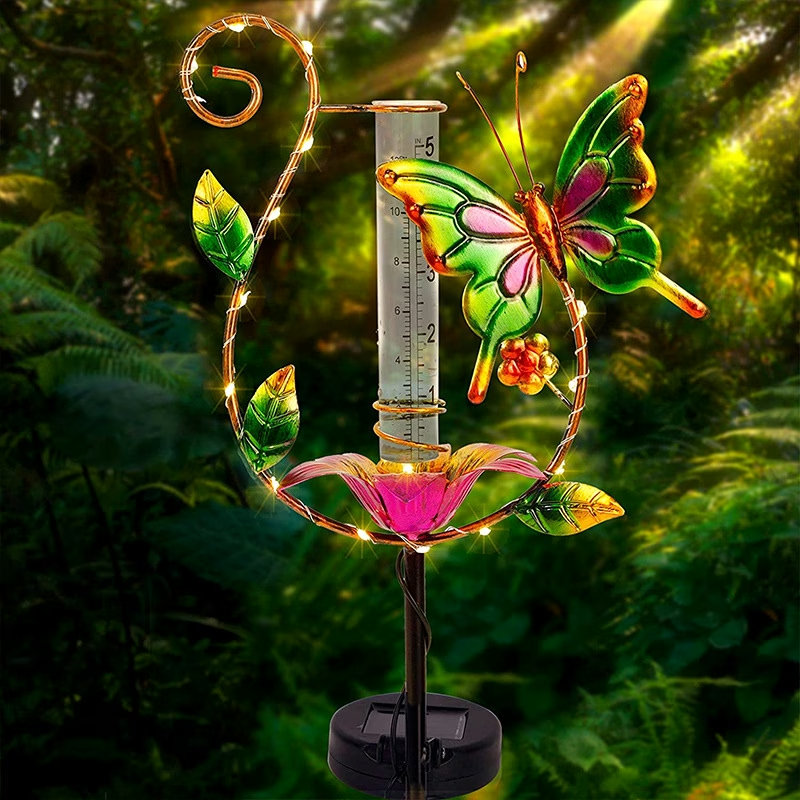
- Pros: Durable, premium appearance, excellent structural strength, can achieve intricate designs through stamping/welding, ages gracefully with patina
- Cons: Heavier (shipping costs), rust potential (requires coating), higher material cost, limited color options without painting
- Best for: Premium ranges, traditional lanterns, pathway lights, wall-mounted fixtures
- Typical price range: Mid to high
2. Plastic (PP, ABS, PC)
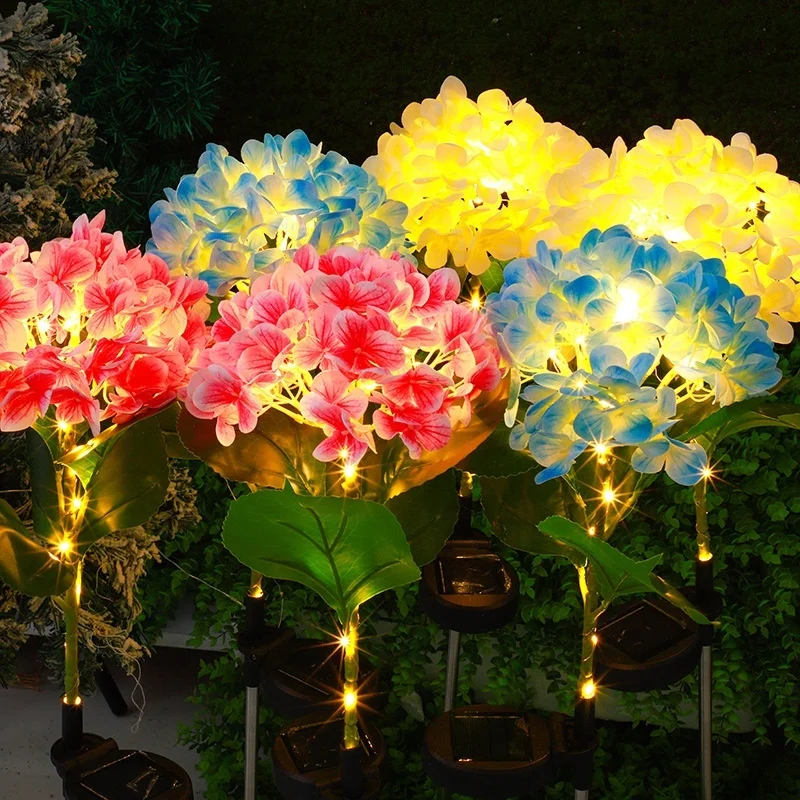
- Pros: Lightweight, cost-effective, unlimited color options, shatterproof, easy to mold complex shapes, low shipping costs
- Cons: Can look cheap if poorly designed, UV degradation over time, less premium perception, may fade in strong sunlight
- Best for: High-volume programs, children’s themes, colorful designs, price-sensitive markets
- Typical price range: Low to mid
3. Resin (Polyresin, Fiberglass Resin)

- Pros: Excellent for detailed sculptures, hand-painted finishes, realistic textures (stone, wood, ceramic look), moderate weight, good durability
- Cons: Hand-crafted elements increase cost and variation, longer production time, can chip if dropped, limited to certain shapes
- Best for: Animal figurines, garden statues, themed decorations, gift items, premium decorative pieces
- Typical price range: Mid to high
4. Glass
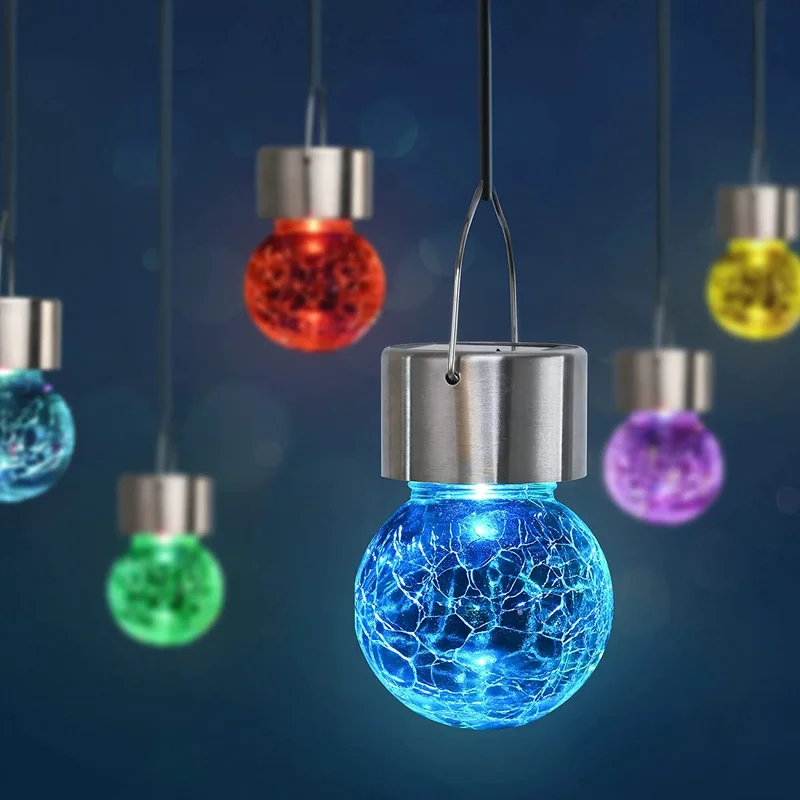
- Pros: Premium appearance, excellent light transmission, creates beautiful light effects, perceived high value, doesn’t fade or degrade
- Cons: Fragile (breakage risk), requires careful packaging, heavier shipping, higher cost, safety concerns in some applications
- Best for: Lanterns, table lights, hanging decorations, premium gift items, indoor-outdoor crossover products
- Typical price range: Mid to high
Combination Materials: Many successful decorative garden lights combine materials—metal frames with glass panels, resin sculptures with metal stakes, plastic housings with metal accents. This approach balances cost, durability, and aesthetic appeal.
For detailed manufacturing insights, see our guides on metal lights manufacturing, plastic lights manufacturing, resin lights manufacturing, and glass lights manufacturing.
How do you choose the right material for your decorative garden lights product line?
Material selection should align with your business strategy:
For High-Volume, Price-Competitive Programs:
- Primary material: Plastic (PP or ABS)
- Target: Big-box retailers, online marketplaces, promotional programs
- Strategy: Leverage existing molds, focus on color variety and simple designs
For Premium Garden Center and Specialty Retail:
- Primary materials: Metal, resin, or glass
- Target: Independent garden centers, home decor boutiques, gift shops
- Strategy: Emphasize craftsmanship, unique designs, superior durability
For E-commerce and Private Label Brands:
- Primary materials: Combination (metal + glass, resin + metal)
- Target: Amazon, own website, niche online stores
- Strategy: Balance perceived value with shipping costs, focus on photogenic designs
For Gift and Seasonal Programs:
- Primary materials: Resin (for figurines), glass (for premium gifts)
- Target: Gift shops, seasonal displays, sympathy/memorial markets
- Strategy: Emotional appeal, attractive packaging, themed collections
What surface finishes and coatings are available for decorative garden lights?
Surface treatments significantly impact appearance, durability, and cost:
Metal Finishes:
- Powder coating – durable, weather-resistant, wide color range, matte or glossy
- Electroplating – chrome, nickel, brass, copper looks; premium appearance
- Painted finishes – hand-painted details, distressed/aged effects, custom colors
- Natural patina – weathered copper, rusted iron looks (controlled oxidation)
- Brushed or polished – stainless steel, aluminum finishes
Plastic Finishes:
- In-mold color – color throughout material, no fading or chipping
- Spray painting – metallic effects, multi-color designs
- Electroplating on plastic – chrome or metallic appearance on ABS
- UV-resistant coatings – extends outdoor life, prevents fading
- Textured surfaces – matte, glossy, or patterned finishes molded in
Resin Finishes:
- Hand-painted details – realistic animal features, stone textures, wood grain
- Spray-painted base colors – consistent background colors
- Weatherproof clear coats – protects paint, adds gloss or matte finish
- Faux finishes – bronze, stone, ceramic, aged wood effects
Glass Treatments:
- Clear glass – maximum light transmission, clean modern look
- Frosted/etched – diffused light, hides internal components
- Colored/tinted – amber, blue, green for mood lighting
- Patterned/textured – creates light patterns, adds visual interest
- Crackle glass – decorative cracked appearance (safe, intentional)
Discuss finish durability with your supplier, especially for harsh climates. Request accelerated aging tests (salt spray, UV exposure) for finishes in premium ranges.
What weatherproofing and durability standards should decorative garden lights meet?
Outdoor products must withstand various environmental challenges:
IP (Ingress Protection) Ratings:
- IP44 – splash-resistant, suitable for covered patios and sheltered areas
- IP65 – dust-tight and water-jet resistant, good for most garden applications
- IP67 – dust-tight and waterproof (temporary immersion), ideal for ground-level and high-exposure locations
- IP68 – dust-tight and waterproof (continuous immersion), necessary for pond/water feature lights
For decorative garden lights, IP65 is the standard minimum for exposed outdoor use. Memorial lights and pathway lights often benefit from IP67 due to ground-level water exposure.
UV Resistance:
- Critical for plastic and painted surfaces
- UV stabilizers should be added to plastic materials
- Powder coatings and quality paints offer better UV resistance than cheap spray paints
- Request UV aging test data (500-1000 hours minimum)
Temperature Range:
- Standard: -20°C to +60°C (-4°F to 140°F)
- Extended range for extreme climates: -40°C to +70°C (-40°F to 158°F)
- Battery performance degrades in extreme cold; consider this for northern markets
Corrosion Resistance:
- Salt spray testing (48-96 hours) for coastal areas
- Stainless steel or aluminum preferred over iron for high-humidity regions
- Quality powder coating or electroplating essential for metal components
Impact Resistance:
- Particularly important for ground-level lights (lawn mowers, foot traffic)
- Plastic and metal more impact-resistant than glass and resin
- Consider protective cages or recessed designs for vulnerable glass elements
Solar Technology and Performance
How do solar panels work in decorative garden lights?
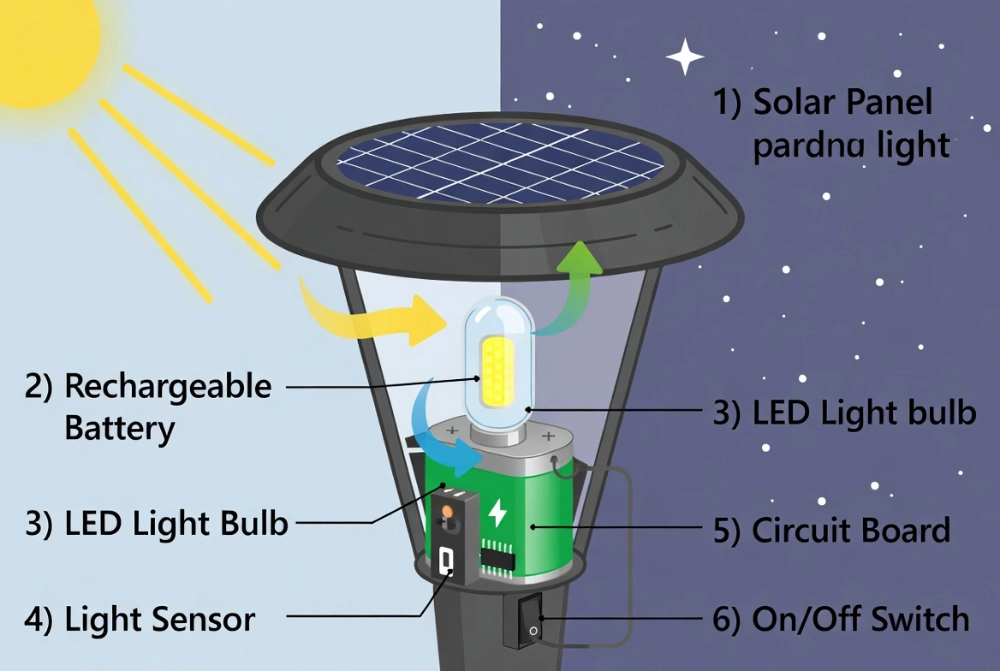
Solar garden lights use photovoltaic (PV) panels to convert sunlight into electricity:
Basic Operation:
- Daytime charging – solar panel converts sunlight to DC electricity
- Energy storage – electricity charges rechargeable battery (typically NiMH or Li-ion)
- Automatic activation – light sensor detects darkness and turns on LED
- Nighttime illumination – battery powers LED until depleted or dawn
Solar Panel Types:
- Monocrystalline – highest efficiency (18-22%), best for limited panel space, higher cost, black appearance
- Polycrystalline – good efficiency (15-18%), cost-effective, blue appearance, most common in garden lights
- Amorphous (thin-film) – lower efficiency (6-10%), flexible, works in low light, lowest cost, less common
For decorative garden lights, polycrystalline panels offer the best balance of cost, efficiency, and reliability. Monocrystalline may be justified for premium products or designs with limited panel area.
What solar panel size and wattage do decorative garden lights need?
Panel sizing depends on battery capacity, LED power, and desired runtime:
Typical Specifications by Light Type:
Small Stake Lights (pathway markers, small decorations):
- Solar panel: 0.5-1W (50-100mm diameter)
- Battery: 300-600mAh NiMH
- LED: 0.06-0.2W
- Runtime: 6-8 hours after full charge
Medium Decorative Lights (garden statues, lanterns):
- Solar panel: 1-2W (80-120mm diameter)
- Battery: 600-1200mAh NiMH or Li-ion
- LED: 0.2-0.5W
- Runtime: 8-10 hours after full charge
Large Feature Lights (statement pieces, multi-LED designs):
- Solar panel: 2-5W (120-180mm diameter)
- Battery: 1200-2400mAh Li-ion
- LED: 0.5-2W (multiple LEDs)
- Runtime: 8-12 hours after full charge
Larger panels and batteries increase cost but provide more reliable performance, especially in climates with limited winter sunlight. Discuss target markets and expected performance with your supplier to optimize specifications.
What battery types are used in solar garden lights and how do they compare?
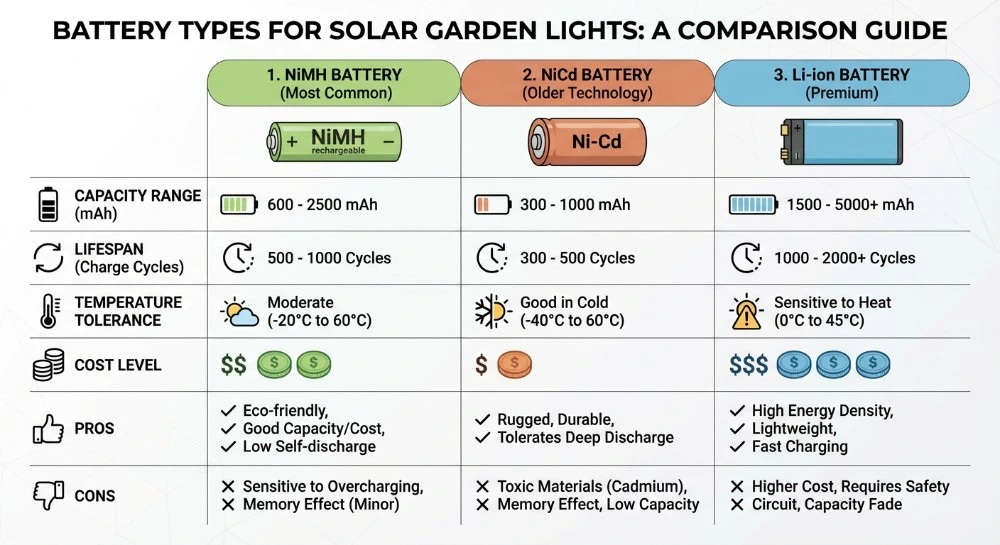
Battery technology significantly impacts performance, lifespan, and cost:
NiMH (Nickel-Metal Hydride) Batteries:
- Pros: Cost-effective, widely available (AA/AAA sizes), good temperature tolerance, environmentally friendlier than NiCd, proven reliability
- Cons: Lower energy density than Li-ion, self-discharge over time, performance degrades in extreme cold, typical lifespan 1-2 years
- Typical capacity: 300-1200mAh
- Best for: Budget to mid-range products, replaceable battery designs, markets where Li-ion regulations are restrictive
- Cost impact: Baseline (lowest cost option)
Li-ion (Lithium-Ion) Batteries:
- Pros: Higher energy density (more runtime in smaller size), minimal self-discharge, better cold-weather performance, longer lifespan (2-3 years), lighter weight
- Cons: Higher cost (2-3x NiMH), requires protection circuitry, shipping restrictions (air freight), not easily user-replaceable
- Typical capacity: 600-3000mAh
- Best for: Premium products, compact designs, cold-climate markets, products emphasizing long runtime
- Cost impact: +$1-3 per unit depending on capacity
LiFePO4 (Lithium Iron Phosphate) Batteries:
- Pros: Longest lifespan (3-5 years), excellent safety profile, stable performance across temperatures, environmentally friendly
- Cons: Highest cost, lower energy density than Li-ion, less common (supply chain considerations)
- Typical capacity: 500-2000mAh
- Best for: Ultra-premium products, commercial installations, markets emphasizing sustainability
- Cost impact: +$2-5 per unit
Battery Selection Strategy:
- Budget lines: NiMH (AA/AAA) – emphasize replaceability as a feature
- Mid-range: NiMH (higher capacity) or entry-level Li-ion
- Premium: Li-ion or LiFePO4 – emphasize longer runtime and lifespan
- Cold climates: Li-ion or LiFePO4 for better winter performance
- Gift items: Li-ion for “set and forget” convenience
Consider offering battery replacement services or spare battery packs for higher-end products to extend product life and create recurring revenue.
How long do solar garden lights run each night and what affects runtime?
Runtime varies based on multiple factors:
Typical Runtime Expectations:
- Budget lights: 4-6 hours (often dim after 3-4 hours)
- Standard quality: 6-8 hours at consistent brightness
- Premium lights: 8-12 hours with stable output
- High-capacity models: 12+ hours (all-night operation)
Factors Affecting Runtime:
1. Charging Conditions:
- Full sun (6-8 hours) = maximum runtime
- Partial shade = 50-70% of rated runtime
- Heavy shade or cloudy days = 20-40% of rated runtime
- Winter months (shorter days, lower sun angle) = reduced performance
2. Battery Health:
- New battery = full rated capacity
- After 1 year = 80-90% capacity (NiMH), 90-95% (Li-ion)
- After 2 years = 60-70% capacity (NiMH), 80-85% (Li-ion)
- Temperature extremes accelerate degradation
3. LED Efficiency and Settings:
- High-efficiency LEDs (120-150 lm/W) extend runtime
- Dimming modes or motion sensors can double runtime
- Multiple LED configurations draw more power
- Color-changing LEDs typically use more power than single-color
4. Environmental Factors:
- Cold temperatures reduce battery capacity (20-40% loss below 0°C/32°F)
- Dirty solar panels reduce charging efficiency
- Snow coverage blocks charging completely
- Seasonal variations (summer = longer runtime, winter = shorter)
Setting Customer Expectations: For B2B buyers, it’s crucial to set realistic expectations with end customers. Market products with conservative runtime claims (e.g., “6-8 hours” rather than “up to 12 hours”) to reduce returns and negative reviews. Provide seasonal performance guidance in product descriptions.
What LED specifications matter for decorative garden lights?
LED selection impacts brightness, color quality, energy efficiency, and cost:
LED Power (Wattage):
- 0.06-0.2W: Ambient glow, pathway markers, accent lighting
- 0.2-0.5W: Decorative illumination, small area lighting
- 0.5-1W: Functional-decorative, readable light levels
- 1-3W: Feature lighting, statement pieces, security-decorative hybrids
Luminous Flux (Lumens):
- 5-15 lumens: Subtle accent, decorative glow
- 15-50 lumens: Pathway marking, ambient lighting
- 50-100 lumens: Functional illumination, reading light
- 100+ lumens: Security-decorative, area lighting
For decorative garden lights, 10-50 lumens is the sweet spot—enough to create ambiance without overwhelming the decorative design.
Color Temperature (Kelvin):
- 2000-2700K (Warm White): Cozy, traditional, candle-like; most popular for decorative applications
- 3000-3500K (Soft White): Neutral warm, versatile, good for modern designs
- 4000-5000K (Cool White): Crisp, contemporary, better for functional-decorative hybrids
- 6000K+ (Daylight): Rarely used in decorative lights; too harsh for ambiance
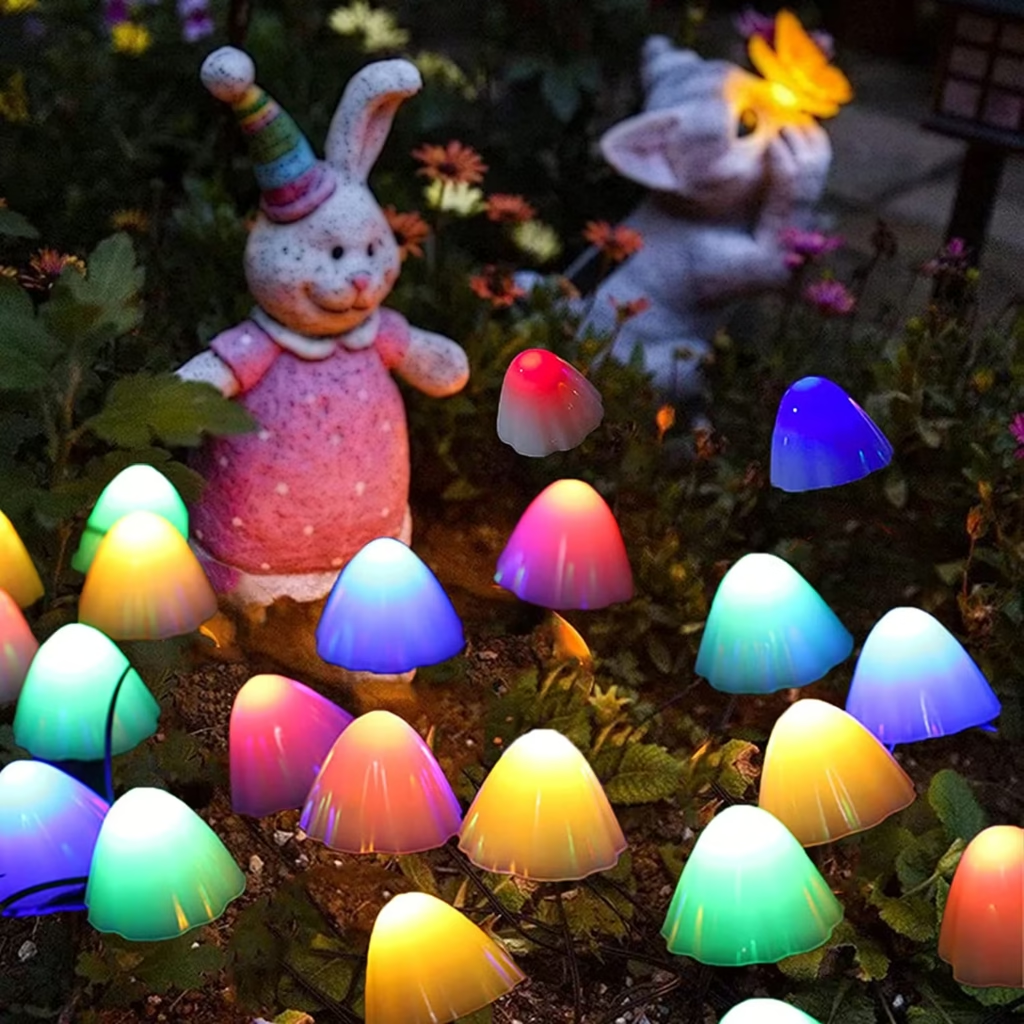
- RGB/Color-Changing: Novelty appeal, higher cost, more complex circuitry
Warm white (2700K) dominates the decorative garden lights market. Consider offering 2-3 color temperature options for different customer preferences.
Color Rendering Index (CRI):
- CRI 70-80: Standard for outdoor decorative lights, adequate color accuracy
- CRI 80-90: Premium quality, better color rendering for plants and decor
- CRI 90+: Rarely necessary for garden lights; significant cost premium
For decorative applications, CRI 70-80 is acceptable. Invest in higher CRI only for premium lines where color accuracy is a selling point.
LED Lifespan:
- Quality LEDs: 30,000-50,000 hours (10-15 years at 8 hours/night)
- Budget LEDs: 15,000-25,000 hours (5-8 years)
- LED failure is rare; battery typically fails first
LED Configuration Options:
- Single LED: Simple, cost-effective, focused light
- Multiple LEDs: Brighter, more even distribution, higher cost
- LED strips: Flexible placement, decorative patterns
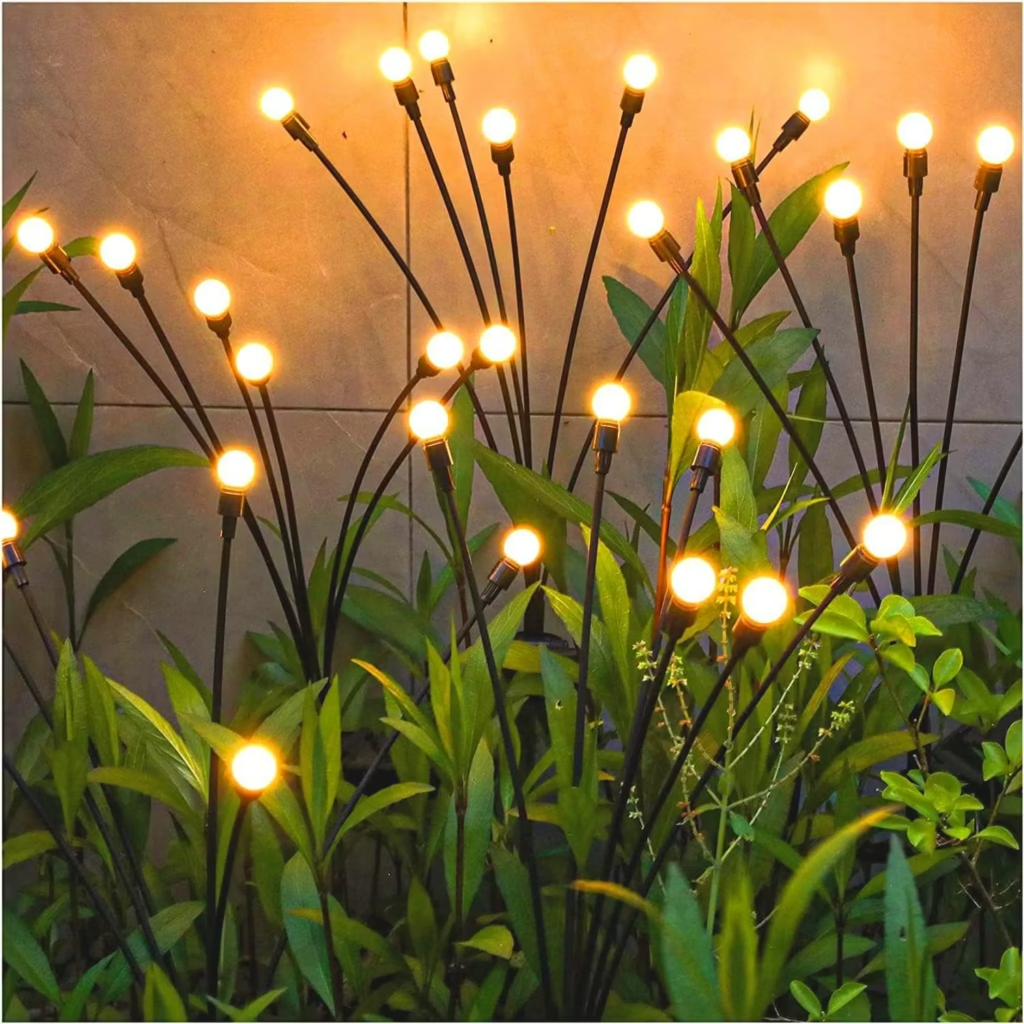
- Filament-style LEDs: Vintage bulb appearance, premium aesthetic
Do solar garden lights work in winter or cloudy climates?
This is one of the most common customer questions. Honest answer: performance is reduced but not eliminated.
Winter Performance Factors:
Reduced Sunlight:
- Shorter days = less charging time
- Lower sun angle = reduced panel efficiency (20-40% decrease)
- Cloudy weather = 10-25% of full-sun charging
- Snow coverage = zero charging until cleared
Cold Temperature Effects:
- NiMH batteries lose 20-40% capacity below freezing
- Li-ion batteries perform better (10-20% loss)
- Solar panels actually work slightly better in cold (but less sunlight overall)
Realistic Winter Expectations:
- Runtime: 2-4 hours (vs. 6-8 hours in summer)
- Brightness: May dim faster as battery depletes
- Charging: Requires 2-3 sunny days to fully charge vs. 1 day in summer
Design Solutions for Cold Climates:
- Larger solar panels (2-3W minimum)
- Li-ion or LiFePO4 batteries
- Higher capacity batteries (1200mAh+)
- Adjustable panel angles to optimize winter sun capture
- Dimming modes or motion sensors to extend runtime
Marketing Guidance: For northern markets (Canada, Northern Europe, Northern US), emphasize “3-season performance” or provide winter performance disclaimers. Consider offering “winter mode” products with enhanced specifications. Some buyers prefer to remove decorative lights in winter, so emphasize easy installation/removal.
What smart features and sensors are available in decorative garden lights?
Smart features add value and differentiation but increase complexity and cost:
Light Sensors (Dusk-to-Dawn):
- Function: Automatically turns light on at dusk, off at dawn
- Cost impact: Minimal (standard feature in most solar lights)
- Benefit: Convenience, energy conservation
- Consideration: Sensitivity adjustment important to avoid false triggers from nearby lights
Motion Sensors (PIR):
- Function: Activates or brightens light when motion detected
- Cost impact: +$1-3 per unit
- Benefit: Extended battery life, security element, interactive experience
- Typical specs: 3-8 meter detection range, 120-180° detection angle
- Best for: Pathway lights, security-decorative hybrids, entrance lighting
Dimming Modes:
- Function: Reduces brightness after set time (e.g., full brightness 4 hours, then 50% until dawn)
- Cost impact: Minimal (programming change)
- Benefit: Doubles runtime, reduces light pollution
- Best for: All-night operation requirements, eco-conscious markets
Color-Changing LEDs:
- Function: Cycles through colors or allows color selection
- Cost impact: +$2-5 per unit
- Benefit: Novelty appeal, mood lighting, holiday versatility
- Consideration: Higher power consumption reduces runtime; appeals to specific customer segments
Remote Control:
- Function: Wireless control of on/off, brightness, color, modes
- Cost impact: +$3-8 per unit
- Benefit: Convenience, customization, premium positioning
- Consideration: Adds complexity; remote must be weatherproof or stored indoors
App Control / Smart Home Integration:
- Function: Smartphone app control, scheduling, integration with Alexa/Google Home
- Cost impact: +$8-15 per unit (WiFi/Bluetooth module, app development)
- Benefit: Premium positioning, tech-savvy customers, advanced scheduling
- Consideration: Requires ongoing app support, connectivity issues, higher MOQ for development costs
USB Charging Port:
- Function: Allows manual charging via USB when sunlight insufficient
- Cost impact: +$0.50-1.50 per unit
- Benefit: Backup charging option, winter performance, indoor use capability
- Consideration: Requires waterproof USB port cover
Feature Selection Strategy:
- Budget lines: Basic dusk-to-dawn sensor only
- Mid-range: Add dimming mode or motion sensor
- Premium: Multiple features (motion + dimming + USB charging)
- Tech-focused: App control and smart home integration
Avoid feature overload—each addition increases cost, complexity, and potential failure points. Focus on features that solve real customer problems or create clear differentiation.
B2B Sourcing Considerations: MOQ, Pricing, and Customization
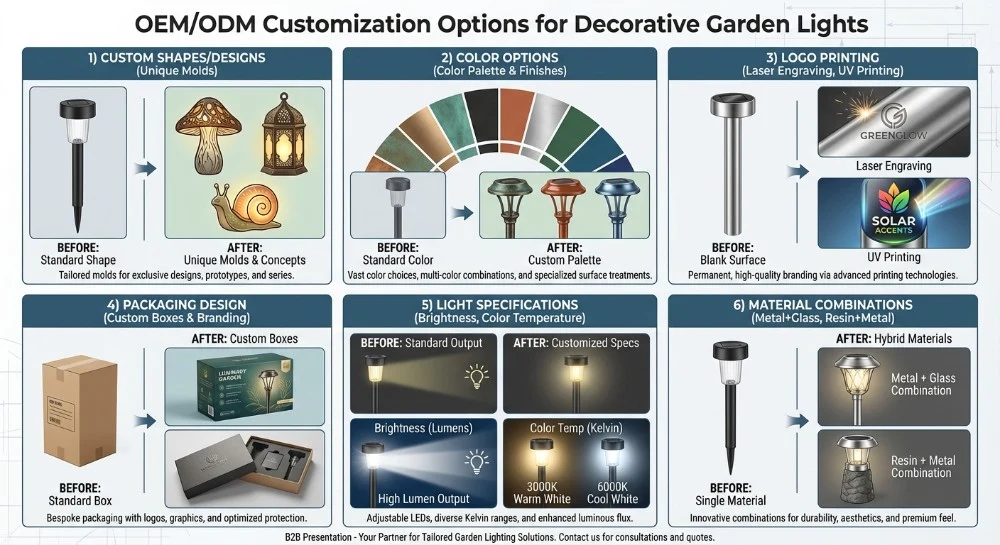
What customization options are available for OEM/ODM decorative garden lights?
Customization allows you to differentiate your brand and meet specific market needs:
Level 1: Branding and Packaging (Lowest MOQ, Fastest)
Logo Application:
- Methods: Laser engraving, pad printing, screen printing, embossing, metal badges
- Locations: Product base, solar panel housing, packaging
Custom Packaging:
- Options: Custom printed boxes, inserts, labels, hang tags, instruction manuals
- Design services: Many manufacturers offer free packaging design
Multilingual Materials:
- Options: Instruction manuals, packaging text, warning labels in target languages
- Common languages: English, Spanish, French, German, Italian, Portuguese
Level 2: Appearance Customization (Moderate MOQ)
Color Changes:
- Plastic: Any color possible with existing molds
- Metal: Powder coating or painting in custom colors
- Resin: Hand-painted color schemes
Finish Modifications:
- Options: Matte vs. glossy, textured surfaces, metallic effects, aged/distressed finishes
Decorative Elements:
- Options: Add/remove decorative details, change patterns, modify textures
Level 3: Functional Customization (Higher MOQ)
Solar Panel Upgrades:
- Options: Larger panels, higher efficiency (monocrystalline), adjustable angles
Battery Upgrades:
- Options: Higher capacity, Li-ion instead of NiMH, replaceable vs. sealed
LED Customization:
- Options: Different color temperatures, brightness levels, color-changing, multiple LEDs
Smart Features Addition:
- Options: Motion sensors, dimming modes, remote control, app control
Level 4: Structural Modification (High MOQ)
Size Changes:
- Options: Larger or smaller versions of existing designs
Material Substitution:
- Options: Metal instead of plastic, glass instead of plastic, resin instead of plastic
Design Modifications:
- Options: Modify shapes, add/remove components, change proportions
Design Services Included:
- Concept consultation and feasibility analysis
- 3D CAD modeling and rendering
- Engineering for manufacturability
- Prototype development (3-5 samples)
- Testing and certification support
- Packaging design
Customization Strategy by Business Model:
Amazon/E-commerce Sellers:
- Start with Level 1-2 (branding + color changes)
- Test market response before investing in tooling
- Focus on photogenic designs and attractive packaging
- Consider Level 3 (functional upgrades) for differentiation once sales proven
Retail Chain Buyers:
- Level 2-3 customization for private label lines
- Emphasize exclusive designs within your market
- Negotiate annual volume commitments for better pricing
Specialty/Gift Retailers:
- Level 2-4 for unique, curated collections
- Focus on design differentiation and quality
- Smaller volumes but higher margins
- Seasonal exclusives and limited editions
Importers/Distributors:
- Level 1-2 for broad catalog offerings
- Level 3-5 for exclusive lines to key retail partners
- Balance standardization (efficiency) with customization (differentiation)
How do you protect your custom designs and prevent copying?
Design protection is a common concern in OEM/ODM relationships:
Legal Protections:
Non-Disclosure Agreement (NDA):
- Sign before sharing detailed concepts or specifications
- Should cover design details, technical specifications, business plans
- Enforceable in China if properly drafted and notarized
- Standard practice with reputable manufacturers
Design Patents:
- US Design Patent: Protects ornamental design; $2,000-5,000; 12-18 months
- China Design Patent: Faster and cheaper ($500-1,500; 6-12 months); essential if manufacturing in China
- EU Design Registration: Covers all EU countries; $1,500-3,000
- File in countries where you manufacture AND sell
Utility Patents:
- Protects functional innovations (e.g., unique mounting system, novel solar integration)
- More expensive ($5,000-15,000) and time-consuming (2-3 years)
- Only worthwhile for truly innovative features
Trademark Protection:
- Protect your brand name and logo
- Register in all markets where you sell
- Prevents manufacturer from using your brand on similar products
Practical Protections:
Exclusive Manufacturing Agreements:
- Contract clause preventing manufacturer from selling your design to others
- May require minimum annual volume commitment
- Typically limited to specific geographic markets
- More enforceable than relying solely on goodwill
Tooling Ownership:
- Pay for tooling/molds upfront to own them
- Gives you leverage and ability to move production if needed
- Typical cost: $2,000-10,000 depending on complexity
- Ensure contract specifies you own tooling and can retrieve it
Component Sourcing Control:
- For critical unique components, source separately and supply to manufacturer
- Makes it harder for manufacturer to replicate without you
- More complex logistics but stronger protection
Relationship Management:
- Build long-term partnerships with reputable manufacturers
- Manufacturers with established brands value reputation over short-term copying gains
- Regular communication and fair treatment reduce incentive to copy
- Gradual volume increases create mutual dependency
Design Complexity:
- More complex designs are harder to copy accurately
- Proprietary components or assembly methods add barriers
- Continuous innovation makes copying a moving target
Market Speed:
- Fast market entry and brand building create first-mover advantage
- By the time copies appear, you’ve established market position
- Continuous product updates keep you ahead
Realistic Expectations:
- Perfect protection is impossible; focus on making copying unprofitable
- Legal action is expensive and time-consuming; prevention is better
- Some copying is inevitable in commodity categories
- Differentiate through brand, service, and continuous innovation
Quality Control, Certifications, and Compliance
What quality control processes should decorative garden lights manufacturers have?
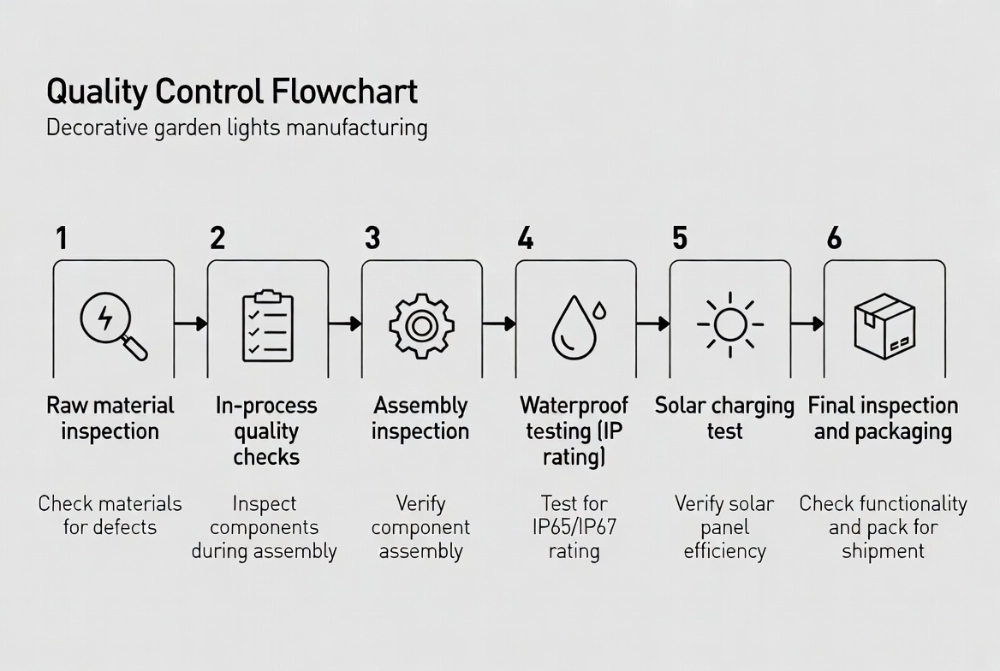
Robust QC systems protect your brand reputation and reduce returns:
4-Stage Inspection System (Industry Standard):
1. IQC (Incoming Quality Control):
- What: Inspection of raw materials and components before production
- Checks: Solar panel output, battery capacity, LED specifications, material quality, dimensions
- Sampling: Typically 10% of each batch or AQL 2.5 standard
- Rejects: Defective materials returned to suppliers
- Why it matters: Prevents defective components from entering production
2. IPQC (In-Process Quality Control):
- What: Monitoring during assembly and production
- Checks: Assembly accuracy, soldering quality, waterproof sealing, component placement
- Frequency: Random checks every 1-2 hours + first article inspection
- Actions: Immediate correction of process issues
- Why it matters: Catches problems before entire batch is affected
3. FQC (Final Quality Control):
- What: Comprehensive testing of finished products before packaging
- Checks: Functionality (charging, lighting), appearance, waterproof integrity, packaging quality
- Testing: 100% functional test + detailed inspection of sample (AQL 1.5-2.5)
- Standards: IP rating verification, runtime testing, light output measurement
- Why it matters: Final gate before products reach customers
4. OQC (Outgoing Quality Control):
- What: Pre-shipment inspection of packaged goods
- Checks: Carton integrity, quantity verification, labeling accuracy, loading condition
- Documentation: Inspection reports, test certificates, packing lists
- Why it matters: Ensures correct products in good condition leave factory
Additional Quality Measures:
Aging Tests:
- Burn-in testing: Run lights continuously for 24-48 hours to identify early failures
- Cycle testing: Charge-discharge cycles to verify battery and solar system
- Temperature cycling: High/low temperature exposure to test material stability
Environmental Testing:
- IP rating tests: Water spray and dust chamber testing
- UV aging: 500-1000 hours UV exposure to test material degradation
- Salt spray: 48-96 hours for corrosion resistance (coastal markets)
- Drop testing: Package drop tests from 60-100cm height
Performance Testing:
- Solar panel output: Measured under standard test conditions
- Battery capacity: Verified with capacity testers
- LED output: Lumen measurement with integrating sphere
- Runtime: Actual runtime testing under controlled conditions
Quality Documentation:
- Inspection reports for each production batch
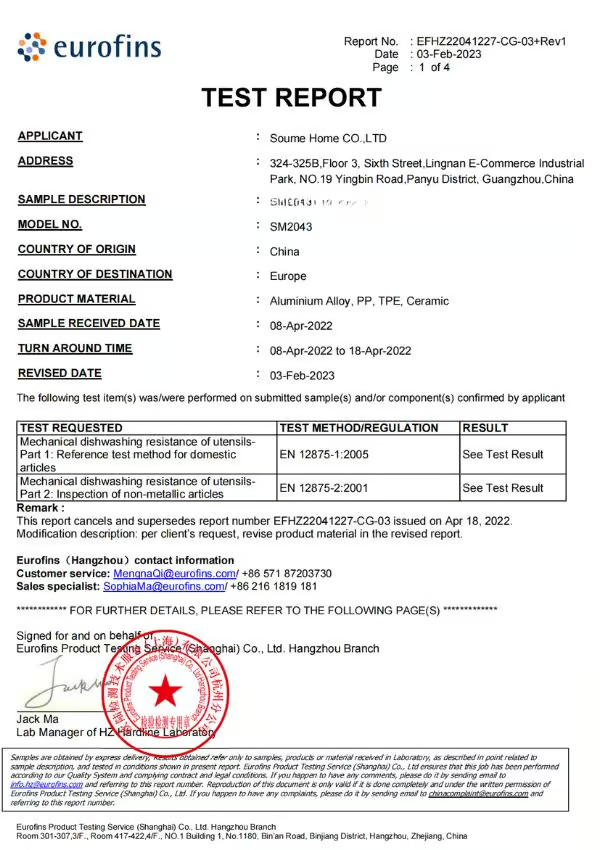
- Test certificates (IP rating, material safety, performance)
- Traceability records (batch numbers, component sources)
- Non-conformance reports and corrective actions
Questions to Ask Potential Suppliers:
- Do you have ISO 9001 certification? (Quality management system)
- What is your typical defect rate? (Should be <0.5% for quality manufacturers)
- Can I visit your QC lab and see testing equipment?
- Do you provide inspection reports with each shipment?
- What is your process for handling defective products?
- Can you accommodate third-party inspection (SGS, TUV, Intertek)?
What certifications are required for decorative garden lights in different markets?
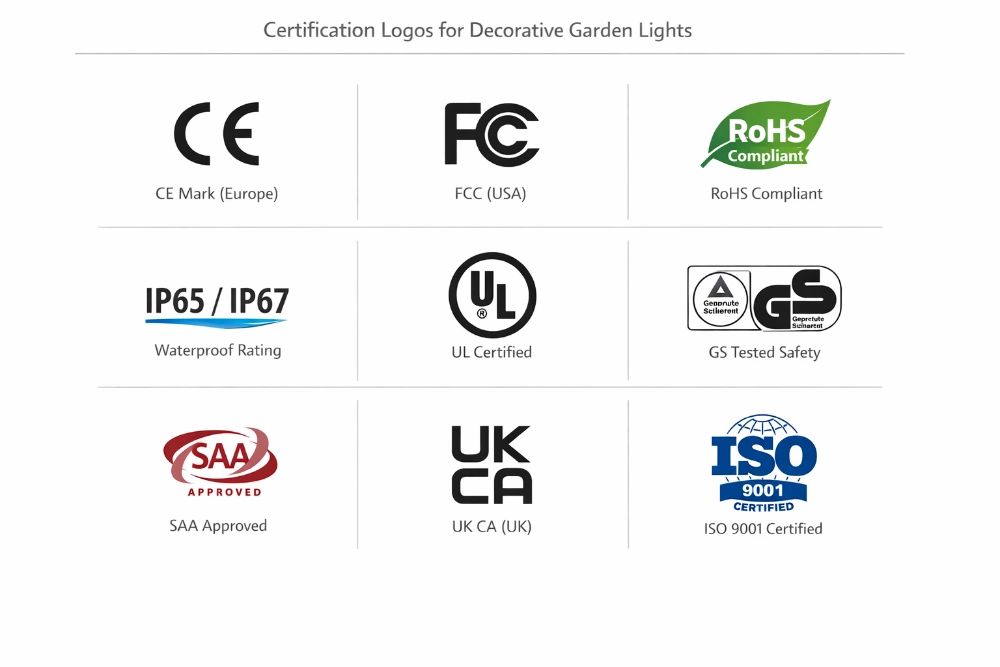
Certifications ensure product safety and market access:
European Union (CE Marking):
Required Directives:
- LVD (Low Voltage Directive): Electrical safety (if >50V AC or >75V DC; most solar lights exempt)
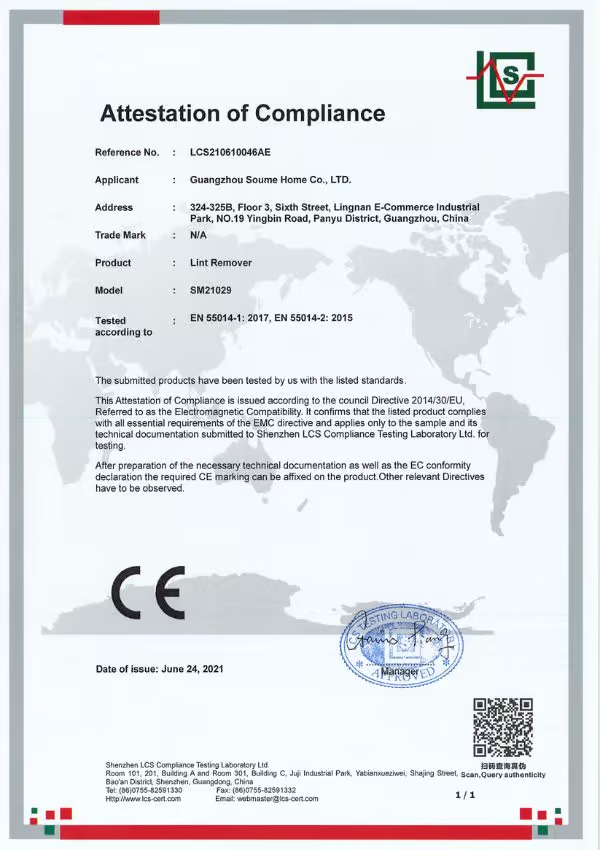
- EMC (Electromagnetic Compatibility): Prevents interference with other devices
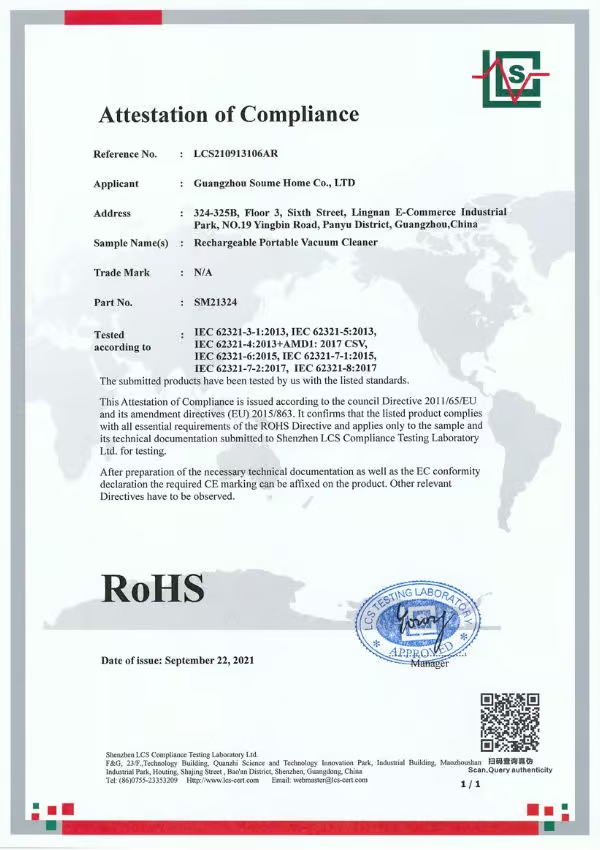
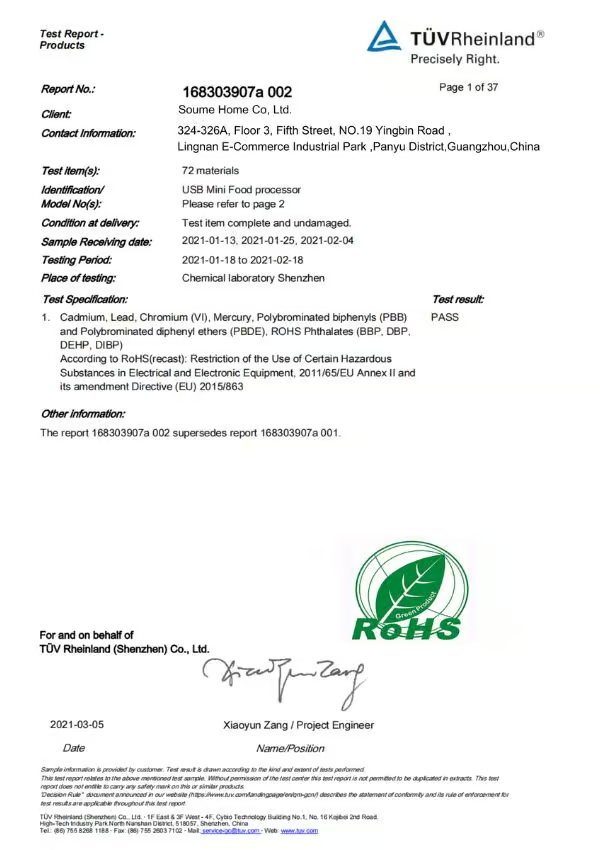
- RoHS (Restriction of Hazardous Substances): Limits lead, mercury, cadmium, etc.
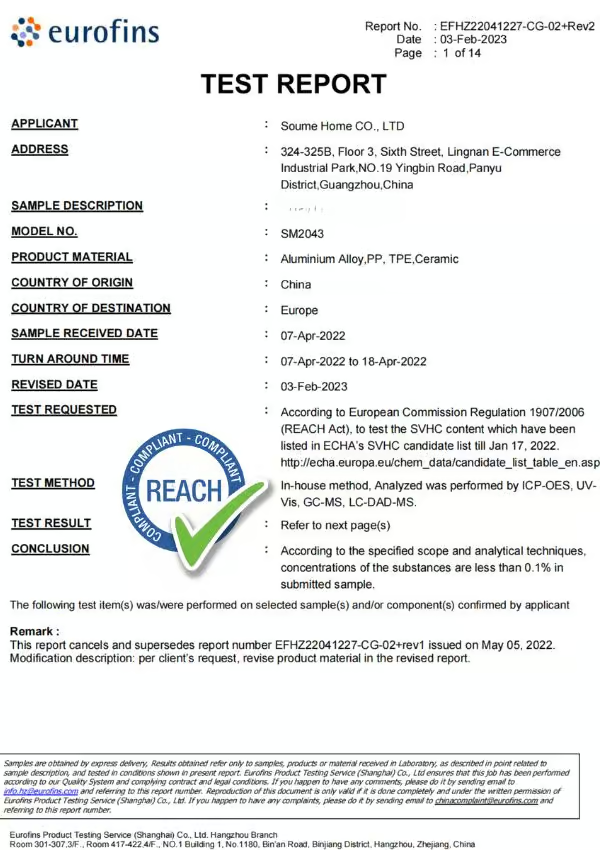
- REACH: Chemical substance registration and restrictions
Testing Standards:
- EN 60598 (Luminaire safety)
- EN 55015 (EMC emissions)
- EN 61547 (EMC immunity)
Cost: $800-2,000 for CE/RoHS/REACH package
Timeline: 4-6 weeks
Validity: Ongoing (retest if design changes)
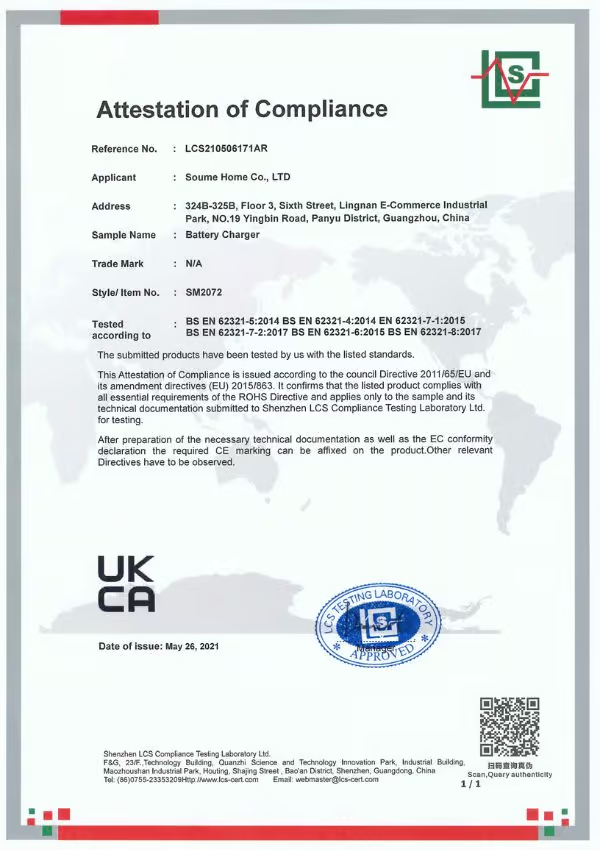
United Kingdom (UKCA Marking):
- Post-Brexit replacement for CE marking in UK
- Similar requirements to CE
- Cost: $500-1,500 (often bundled with CE testing)
- CE marking still accepted until further notice, but UKCA recommended
United States:
FCC (Federal Communications Commission):
- Required for: Products with electronic circuits (all solar lights)
- Part 15: Limits radio frequency interference
- Testing: Emissions testing in accredited lab
- Cost: $1,000-3,000
- Timeline: 3-4 weeks
UL (Underwriters Laboratories) – Optional but Recommended:
- UL 2108: Low voltage lighting systems
- UL 2108A: Solar-powered lighting
- Benefit: Increases buyer confidence, required by some retailers
- Cost: $3,000-8,000 (initial) + annual fees
- Timeline: 8-12 weeks
California Prop 65:
- Warning label required if product contains listed chemicals above threshold
- Common triggers: Lead in solder, phthalates in plastics
- Compliance: Material testing + warning label if needed
- Cost: $300-800 for testing
Canada:
- IC (Innovation, Science and Economic Development Canada): Similar to FCC
- CSA: Canadian safety standards (similar to UL)
- Cost: Often bundled with US certifications; $500-1,500 additional
Australia/New Zealand:
- RCM (Regulatory Compliance Mark): Electrical safety and EMC
- Standards: AS/NZS 60598 (similar to European EN 60598)
- Cost: $1,000-2,500
- Timeline: 4-6 weeks
IP (Ingress Protection) Rating:
- Not a certification but a tested specification
- IP65/IP67 testing: $300-800 per model
- Required for outdoor product claims
- Include in product specifications and marketing
Certification Strategy:
For US Market Only:
- Minimum: FCC (required)
- Recommended: FCC + UL (for major retailers)
- Budget: $1,000-8,000
For EU Market Only:
- Required: CE (LVD/EMC) + RoHS + REACH
- Budget: $800-2,000
For US + EU Markets:
- Package: FCC + CE + RoHS + REACH
- Budget: $2,000-4,000
- Many labs offer combined testing discounts
For Global Distribution:
- Full package: FCC + CE + RoHS + REACH + UKCA + RCM
- Budget: $3,500-6,000
- Amortize costs across first production order
Cost Management Tips:
- Test one representative model per product family (similar designs can share certifications)
- Negotiate certification costs with manufacturer (often included in MOQ pricing)
- Use manufacturer’s existing certifications if buying stock designs
- Plan certifications before production to avoid delays
- Keep test reports and certificates for customs and retailer requirements
What factory certifications and audits should you look for?
Factory-level certifications indicate systematic quality and ethical practices:
ISO 9001 (Quality Management System):
- What it means: Standardized quality processes, documentation, continuous improvement
- Benefit: Consistent quality, traceability, professional management
- Verification: Request certificate and check validity on ISO website
- Importance: High – baseline for serious manufacturers
BSCI (Business Social Compliance Initiative):
- What it means: Ethical labor practices, safe working conditions, fair wages
- Benefit: Reduces reputational risk, meets retailer requirements
- Audit scope: Working hours, child labor, health & safety, wages
- Importance: High for EU retailers, increasingly important for US
Sedex (Supplier Ethical Data Exchange):
- What it means: Ethical supply chain management platform
- Benefit: Transparency in labor practices, environmental impact
- Audit: SMETA (Sedex Members Ethical Trade Audit)
- Importance: Required by many UK and EU retailers
ISO 14001 (Environmental Management):
- What it means: Systematic environmental impact management
- Benefit: Reduced environmental footprint, regulatory compliance
- Importance: Medium – growing importance for sustainability-focused brands
SA 8000 (Social Accountability):
- What it means: Comprehensive social responsibility standard
- Benefit: Highest level of ethical manufacturing assurance
- Importance: Medium – less common but highly regarded
Factory Audit Checklist (If Visiting):
Production Capabilities:
- Production lines and equipment condition
- Monthly/annual capacity
- Number of workers and skill levels
- Automation level
Quality Control:
- QC lab and testing equipment
- Inspection procedures and documentation
- Defect rate tracking
- Corrective action processes
Supply Chain:
- Component sourcing (in-house vs. outsourced)
- Supplier relationships and stability
- Inventory management
- Lead time reliability
Working Conditions:
- Factory cleanliness and organization
- Safety equipment and procedures
- Worker treatment and morale
- Dormitory conditions (if applicable)
Management:
- Communication and responsiveness
- English proficiency of key contacts
- Organizational structure
- Long-term stability and growth
Common Questions from End Customers (B2C Perspective)
Do solar garden lights work in shade or cloudy weather?
Solar lights work best in direct sunlight but can function in partial shade or cloudy conditions with reduced performance:
Direct Sunlight (6-8 hours):
- Full charge achieved
- Maximum runtime (6-12 hours depending on model)
- Consistent brightness throughout night
Partial Shade (3-5 hours direct sun):
- 70-80% charge capacity
- Reduced runtime (4-8 hours)
- May dim earlier in evening
- Still functional for most decorative purposes
Heavy Shade (1-2 hours direct sun):
- 30-50% charge capacity
- Limited runtime (2-4 hours)
- Noticeably dimmer
- May not turn on every night
Cloudy Weather:
- Panels still collect diffused sunlight
- Charging at 10-25% of sunny day capacity
- Multiple cloudy days in a row will deplete battery
- Performance recovers after sunny days
Solutions for Shady Locations:
- Choose lights with larger solar panels (2W+)
- Select models with higher capacity batteries (1200mAh+)
- Consider lights with separate solar panels that can be positioned in sun
- Use motion sensors or dimming modes to extend runtime
- Accept shorter runtime as trade-off for desired location
How long do solar garden lights last?
Lifespan varies by component and quality:
LED Lifespan:
- Quality LEDs: 30,000-50,000 hours (10-15 years at 8 hours/night)
- LEDs rarely fail completely; they gradually dim over time
- Usually not the limiting factor in product life
Battery Lifespan (Most Common Failure Point):
- NiMH batteries: 1-2 years (300-500 charge cycles)
- Li-ion batteries: 2-3 years (500-1000 charge cycles)
- LiFePO4 batteries: 3-5 years (2000+ charge cycles)
- Performance gradually degrades (shorter runtime, dimmer light)
- Replaceable batteries extend product life significantly
Solar Panel Lifespan:
- Quality panels: 10-20 years with gradual efficiency loss (0.5-1% per year)
- Budget panels: 5-10 years
- Damage from hail, debris, or UV degradation more common than failure
Housing/Structure Lifespan:
- Metal (quality powder coating): 5-10 years
- Plastic (UV-stabilized): 3-7 years
- Resin (quality): 5-10 years
- Glass: Indefinite if not broken
- Depends heavily on climate and maintenance
Overall Product Lifespan:
- Budget lights: 1-2 years typical
- Mid-range lights: 2-4 years typical
- Premium lights: 4-7 years typical
- With battery replacement: Add 1-3 years
Extending Lifespan:
- Clean solar panels regularly (monthly)
- Store indoors during harsh winter (optional)
- Replace batteries when performance degrades
- Keep lights away from sprinklers (water damage)
- Tighten screws and check seals annually
Are solar garden lights bright enough?
Brightness depends on purpose and expectations:
Brightness Levels:
- 5-15 lumens: Subtle accent, decorative glow, pathway marking
- 15-50 lumens: Ambient lighting, visible illumination, garden features
- 50-100 lumens: Functional lighting, reading light, security element
- 100+ lumens: Task lighting, security lighting, area illumination
Realistic Expectations:
- Decorative garden lights prioritize ambiance over brightness
- Not intended to replace security lighting or task lighting
- Create mood and highlight features rather than flood areas with light
- Multiple lights together create cumulative effect
Comparison to Traditional Lighting:
- 10-15 lumen solar light ≈ 1-2W incandescent bulb (candle-like)
- 30-40 lumen solar light ≈ 5W incandescent bulb (nightlight)
- 60-80 lumen solar light ≈ 10W incandescent bulb (reading light)
When Solar Lights Are Bright Enough:
- Marking pathways and borders
- Highlighting garden features (plants, sculptures)
- Creating ambiance for outdoor dining
- Decorative accents in flower beds
- Memorial and remembrance lighting
When You Need Brighter Options:
- Security lighting (consider solar security lights with motion sensors)
- Task lighting (grilling, reading)
- Illuminating large areas
- Primary lighting for outdoor living spaces
Can you replace batteries in solar garden lights?
Battery replaceability varies by design:
User-Replaceable Batteries:
- Standard AA or AAA NiMH batteries
- Access via battery compartment (usually bottom of light)
- Replacement batteries available at hardware stores
- Cost: $5-15 for set of batteries
- Extends product life by 1-3 years
Manufacturer-Replaceable Batteries:
- Custom battery packs or Li-ion cells
- Requires disassembly (screws, seals)
- Replacement batteries from manufacturer or specialty suppliers
- Cost: $10-30 depending on capacity
- May void warranty if done incorrectly
Non-Replaceable Batteries:
- Sealed units with soldered or glued batteries
- Intended as disposable after battery life
- Common in very low-cost lights
- Environmentally questionable
Battery Replacement Tips:
- Use same voltage and chemistry (don’t mix NiMH and Li-ion)
- Match or exceed original capacity (mAh)
- Replace all batteries in a set at same time
- Dispose of old batteries properly (recycling)
- Check seals and gaskets when reassembling
For B2B Buyers: Offering replacement batteries as accessories creates recurring revenue and extends customer satisfaction. Consider including battery replacement instructions and offering battery packs for sale.
How do you install decorative garden lights?
Installation varies by light type but is generally simple:
Stake Lights (Most Common):
- Choose location with adequate sunlight (6+ hours daily)
- Ensure solar panel faces south (Northern Hemisphere) or north (Southern Hemisphere)
- Remove any protective film from solar panel
- Turn on switch (usually on bottom or back of light)
- Push stake firmly into soft soil (water soil first if hard)
- Ensure light is vertical and stable
- Allow 1-2 sunny days for initial full charge
Hanging Lights:
- Select hanging location (tree branch, pergola, hook)
- Ensure solar panel receives adequate sunlight
- Use provided hanging loop or chain
- Hang at desired height (typically 6-8 feet)
- Turn on switch
- Allow initial charging period
Wall-Mounted Lights:
- Choose wall location with sun exposure
- Mark mounting holes using template or light as guide
- Drill pilot holes (use appropriate anchors for wall type)
- Attach mounting bracket with screws
- Hang or clip light onto bracket
- Turn on switch
- Test stability and adjust angle if needed
Tabletop Lights:
- Place on stable, level surface
- Position where solar panel receives sunlight
- Turn on switch
- No installation required
In-Ground Lights:
- Dig hole to appropriate depth (usually 2-4 inches)
- Ensure ground is level
- Place light in hole
- Backfill and tamp soil around light
- Ensure top is flush with ground or slightly raised
- Turn on switch
Installation Tips:
- Spacing: Place pathway lights 6-8 feet apart for continuous lighting
- Grouping: Odd numbers (3, 5, 7) create more visually appealing arrangements
- Height variation: Mix heights for visual interest
- Avoid obstacles: Keep away from sprinklers, lawn mower paths
- Test first: Place lights without installing to test positions and lighting effect
Common Installation Mistakes:
- Installing in shade (insufficient charging)
- Forgetting to remove protective film from solar panel
- Not turning on switch (many lights have on/off switch)
- Installing too close to other light sources (prevents auto-on)
- Forcing stakes into hard ground (can break stakes)
- Not allowing initial charging period (expecting immediate full brightness)
For B2B Buyers: Include clear, illustrated installation instructions with products. Consider creating installation videos and QR codes on packaging linking to online tutorials. Good installation guidance reduces returns and negative reviews.
How do you maintain and troubleshoot solar garden lights?
Regular maintenance extends lifespan and ensures optimal performance:
Regular Maintenance (Monthly):
Clean Solar Panels:
- Wipe with damp cloth to remove dust, pollen, bird droppings
- Use mild soap for stubborn dirt
- Avoid abrasive cleaners that scratch panel
- Clean more frequently in dusty or high-pollen areas
- Impact: Can restore 20-40% of lost charging capacity
Check for Debris:
- Remove leaves, spider webs, insect nests
- Clear any obstructions blocking solar panel
- Trim overhanging branches if shading has increased
Inspect Seals and Gaskets:
- Check for cracks or gaps in waterproof seals
- Tighten any loose screws
- Replace damaged gaskets if accessible
Seasonal Maintenance:
Spring:
- Deep clean after winter
- Check for winter damage (cracks, rust, fading)
- Replace batteries if performance declined over winter
- Reposition lights if landscaping changed
Fall:
- Clean before winter
- Tighten all connections
- Consider storing delicate lights indoors for winter (optional)
- Apply rust protection to metal components if needed
Common Problems and Solutions:
Problem: Light doesn’t turn on at night
- Check: Is switch in ON position?
- Check: Is protective film removed from solar panel?
- Check: Is light in shade or near other light sources?
- Check: Has battery had 1-2 sunny days to charge?
- Solution: Move to sunnier location, clean panel, replace battery
Problem: Light is dim or doesn’t last all night
- Cause: Dirty solar panel, weak battery, insufficient sunlight
- Solution: Clean panel thoroughly, replace battery, move to sunnier spot
- Note: Gradual dimming over months indicates battery aging (normal)
Problem: Light turns on during day or flickers
- Cause: Faulty light sensor, water damage to electronics
- Solution: Clean sensor area, check for water intrusion, may need replacement
Problem: Light stopped working completely
- Check: Battery connections (corrosion, loose wires)
- Check: LED connections
- Check: Water damage inside housing
- Solution: Clean connections, dry out interior, replace battery, or replace unit
Problem: Plastic faded or cracked
- Cause: UV degradation, poor quality plastic
- Prevention: Choose UV-stabilized plastics or metal/glass alternatives
- Solution: Replacement (not repairable)
Problem: Metal rusted or corroded
- Cause: Coating damage, coastal salt exposure
- Prevention: Choose stainless steel or quality powder coating
- Solution: Remove rust, apply rust converter and protective coating
Winter Storage (Optional):
- Remove batteries before storing (prevents corrosion)
- Clean and dry thoroughly
- Store in dry, temperature-stable location
- Wrap delicate items (glass, resin) in bubble wrap
- Reinstall in spring after last frost
For B2B Buyers: Provide maintenance guides and troubleshooting tips with products. Consider offering maintenance kits (cleaning cloths, replacement batteries, seals) as accessories. Good support reduces returns and builds customer loyalty.
Working with Decorative Garden Lights Manufacturers
How do you find and evaluate reliable decorative garden lights suppliers?
Finding the right manufacturing partner is critical for long-term success:
Sourcing Channels:
Online B2B Platforms:
- Alibaba: Largest selection, verify Gold Suppliers and Trade Assurance
- Global Sources: More vetted suppliers, higher quality focus
- Made-in-China: Good for Chinese manufacturers
- Pros: Wide selection, easy comparison, buyer protection
- Cons: Quality varies, many trading companies, communication challenges
Trade Shows:
- Canton Fair (Guangzhou, China): Twice yearly, massive selection
- Hong Kong Lighting Fair: Spring and Fall editions
- Spoga+Gafa (Cologne, Germany): Garden and outdoor living
- National Hardware Show (Las Vegas, US): Home improvement focus
- Pros: See products in person, meet teams, build relationships
- Cons: Travel costs, time investment, overwhelming selection
Industry Referrals:
- Ask non-competing businesses in your industry
- Join industry associations and forums
- LinkedIn networking with other importers
- Pros: Pre-vetted suppliers, insider knowledge
- Cons: Limited to referrer’s experience, may not fit your needs
Sourcing Agents:
- Independent agents or agencies in China
- Handle supplier search, negotiation, QC, logistics
- Fee: 5-10% of order value or monthly retainer
- Pros: Local expertise, language skills, quality control
- Cons: Additional cost, dependency, potential conflicts of interest
Initial Supplier Evaluation Checklist:
Company Background:
- Years in business (prefer 5+ years)
- Factory ownership vs. trading company
- Main product focus (specialists vs. generalists)
- Export experience and main markets
- Company size (employees, production capacity)
Certifications and Compliance:
- ISO 9001 (quality management)
- BSCI or Sedex (social compliance)
- Product certifications (CE, FCC, UL, etc.)
- Factory audit reports (if available)
Production Capabilities:
- In-house vs. outsourced processes
- Monthly production capacity
- Equipment and technology level
- R&D team size and capabilities
- Sample development speed
Quality Control:
- QC procedures and documentation
- Testing equipment and lab
- Defect rate statistics
- Warranty and after-sales policies
Communication and Service:
- English proficiency of key contacts
- Response time to inquiries
- Willingness to provide detailed information
- Transparency about capabilities and limitations
- References from existing clients
Red Flags to Avoid:
- Unwilling to provide factory address or photos
- Prices significantly lower than market (too good to be true)
- Pressure to order immediately without samples
- Vague or evasive answers to specific questions
- No certifications or quality documentation
- Poor communication or long response delays
- Unwilling to accept third-party inspection
- No clear MOQ or pricing structure
Sample Evaluation Process:
Step 1: Request Samples (3-5 suppliers)
- Order 2-3 samples per supplier
- Include similar designs for comparison
- Negotiate sample costs (often refundable)
- Use express shipping (DHL/FedEx) for speed
Step 2: Physical Inspection
- Materials quality and finish
- Assembly quality and attention to detail
- Weight and perceived value
- Packaging quality
- Instruction clarity
Step 3: Functional Testing
- Charge in sunlight for 1-2 days
- Measure runtime and brightness
- Test in various weather conditions if possible
- Check waterproofing (spray with hose)
- Assess ease of installation
Step 4: Comparative Analysis
- Create comparison matrix (quality, price, features, service)
- Calculate total landed cost for each supplier
- Consider MOQ and payment terms
- Evaluate communication experience
Step 5: Reference Checks
- Request 2-3 client references
- Ask about quality consistency, delivery reliability, problem resolution
- Search for online reviews or complaints
Step 6: Small Test Order
- Place minimum order (100-300 pcs) with top 1-2 suppliers
- Evaluate full production quality vs. samples
- Test logistics and documentation
- Assess problem resolution if issues arise
What should be included in a manufacturing agreement?
A clear contract protects both parties and sets expectations:
Essential Contract Elements:
1. Product Specifications:
- Detailed description of products (models, SKUs)
- Materials, dimensions, colors, finishes
- Technical specifications (battery, LED, solar panel)
- Reference to approved samples
- Quality standards and acceptable defect rates
2. Pricing and Payment Terms:
- Unit prices for each SKU
- Volume-based pricing tiers
- Payment schedule (e.g., 30% deposit, 70% before shipment)
- Payment methods accepted
- Currency and exchange rate handling
- Price validity period and adjustment terms
3. Minimum Order Quantities:
- MOQ per SKU and per order
- Mixed container policies
- Reorder MOQs vs. initial order
4. Lead Times and Delivery:
- Production lead time from deposit
- Sampling lead time
- Delivery terms (FOB, CIF, DDP)
- Shipping port and method
- Penalties for late delivery (if applicable)
5. Quality Control and Inspection:
- QC procedures and standards
- Right to third-party inspection
- Acceptable Quality Level (AQL) standards
- Defect definition and handling
- Pre-shipment inspection requirements
6. Warranty and After-Sales:
- Warranty period and coverage
- Defect rate thresholds for claims
- Replacement or refund procedures
- Spare parts availability
- Technical support provisions
7. Intellectual Property:
- Ownership of custom designs and tooling
- Confidentiality and non-disclosure
- Exclusivity terms (if applicable)
- Trademark and logo usage rights
- Protection against copying
8. Customization and Changes:
- Process for design modifications
- Approval procedures for changes
- Additional costs for customization
- Tooling ownership and costs
9. Certifications and Compliance:
- Required product certifications
- Responsibility for certification costs
- Compliance with target market regulations
- Material safety and RoHS compliance
10. Dispute Resolution:
- Governing law and jurisdiction
- Arbitration procedures
- Communication and escalation process
11. Term and Termination:
- Contract duration
- Renewal terms
- Termination conditions and notice period
- Obligations upon termination
Contract Tips:
- Have contract reviewed by lawyer familiar with international trade
- Use clear, specific language (avoid ambiguity)
- Include all verbal agreements in writing
- Attach approved samples and specifications as exhibits
- Ensure both parties sign and retain copies
- Update contract as relationship evolves
Conclusion and Next Steps
Decorative garden lights represent a dynamic and growing market segment with opportunities for businesses of all sizes. Success requires understanding both the technical aspects (materials, solar technology, quality standards) and business considerations (MOQ, pricing, customization, certifications).
Key Takeaways:
- Material selection should align with your target market, price point, and brand positioning
- Solar technology continues to improve; invest in quality components for better customer satisfaction
- MOQ flexibility varies widely; start small and scale as you prove market demand
- Certifications are essential for market access and retailer requirements
- Quality control protects your brand reputation and reduces costly returns
- Supplier relationships are long-term partnerships; invest time in finding the right fit
- Product strategy should balance core bestsellers with seasonal and specialty items
- Marketing must address both emotional appeal (beauty, ambiance) and practical concerns (durability, performance)
Getting Started:
For First-Time Buyers:
- Define your target market and customer profile
- Research competitors and identify gaps
- Request samples from 3-5 suppliers
- Start with existing designs (lowest MOQ and risk)
- Place small test order (100-300 pcs)
- Gather customer feedback before scaling
For Established Buyers Looking to Expand:
- Analyze your current bestsellers and gaps
- Consider customization to differentiate
- Explore new materials or features
- Develop seasonal and exclusive collections
- Negotiate better terms based on volume history
- Build deeper supplier partnerships
Partner with Glowyard Lighting:
As a specialized decorative garden lights manufacturer with 15+ years of experience, Glowyard Lighting offers:
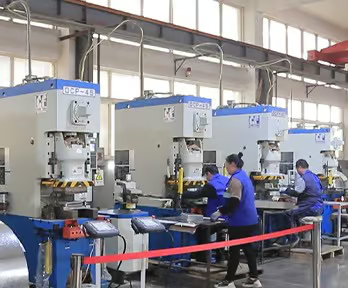
- 300+ existing designs ready for immediate order or customization
- Low MOQ from 50 pcs for simple customization, enabling market testing
- Full OEM/ODM services from concept to production
- Comprehensive certifications (CE, RoHS, FCC, UL, UKCA) for global markets
- Quality assurance with ISO 9001, BSCI, Sedex certifications and <0.5% defect rate
- Fast turnaround (7-10 day sampling, 15-35 day production)
- E-commerce support including Amazon A+ content, product videos, multilingual descriptions
- Flexible payment terms (Net 30-60 for qualified clients)
Contact Us:
- Email: [email protected]
- WhatsApp: +86 147 4935 2668
- Website: www.glowyard.com
- Factory Locations: Fujian & Guangdong, China
Request a Quote: Share your requirements (target products, quantities, customization needs, target markets) and we’ll provide a detailed proposal within 24 hours.
Schedule a Consultation: Book a video call with our R&D team to discuss your specific needs and explore design possibilities.
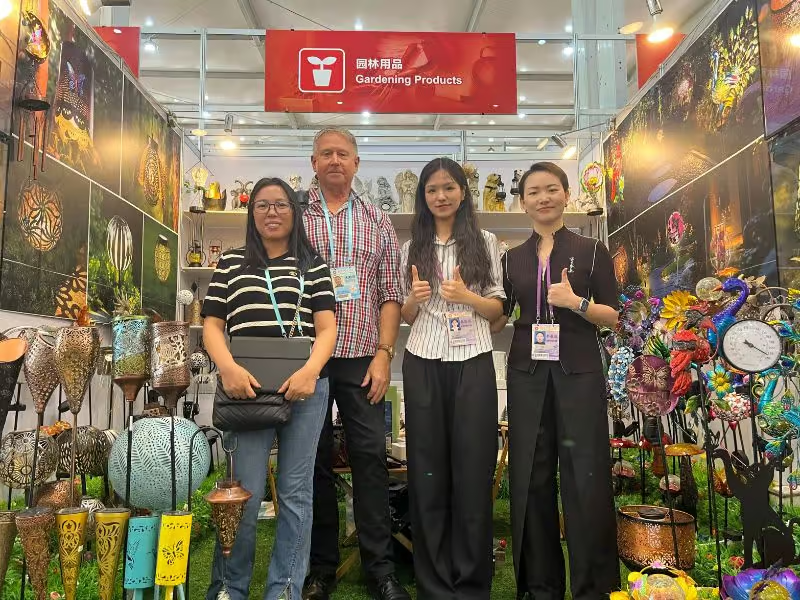
Visit Our Factory: We welcome factory visits to see our production capabilities, quality control processes, and meet our team in person.
This buyer’s guide is regularly updated to reflect industry developments, market trends, and customer feedback. Last updated: December 2025.
For additional resources, visit our Support Center for manufacturing guides, quality standards, and technical documentation.